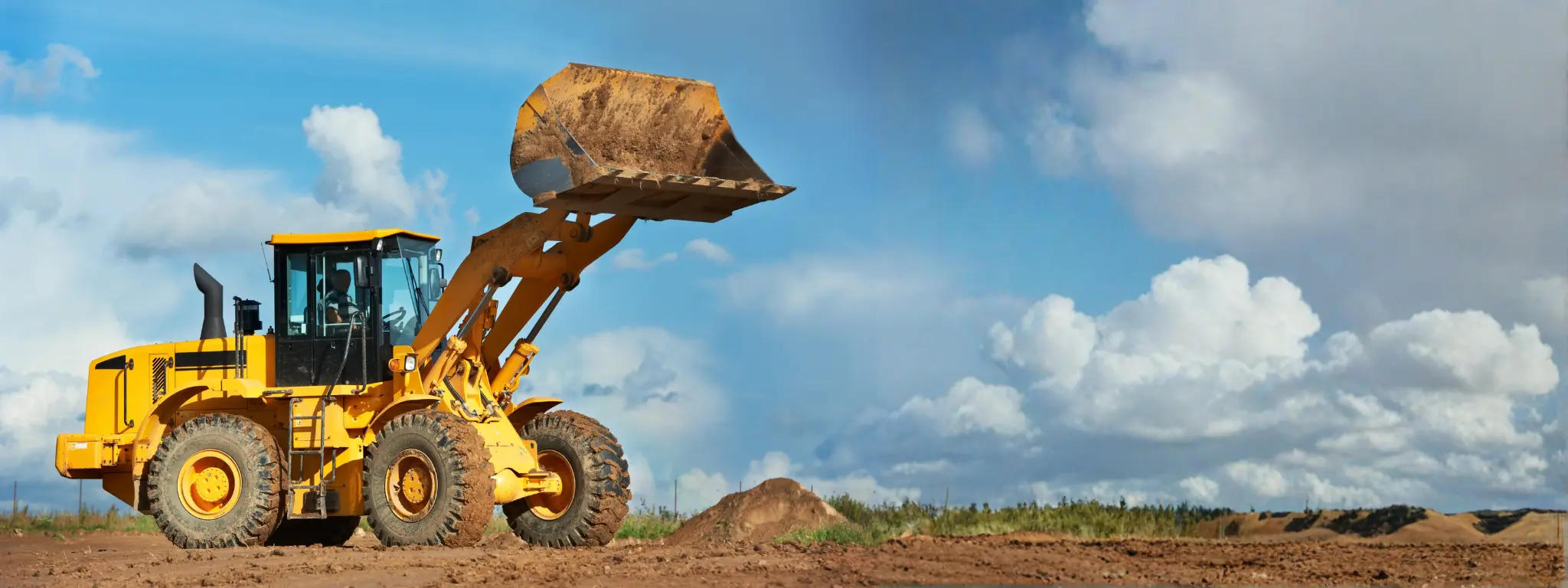
Selecting the right wheel loader size for construction and bulk material handling in the UAE directly impacts productivity, fuel consumption, and job site cycle times. The Caterpillar 950 wheel loader features an operating weight of 19 to 20 tonnes with a 3 cubic metre bucket, making it the standard choice for medium civil works, utility backfilling, and aggregate stockpiling. In contrast, the larger Caterpillar 966 offers an operating weight of 23 to 25 tonnes with a 4 cubic metre bucket, built for high-volume quarry work, primary earthmoving, and rapid loading of large multi-axle tipper trucks.
Matching machine capacity to site requirements prevents costly bottlenecks and excessive fuel expenditure. This guide compares performance metrics, bucket fill factors, site suitability, and regulatory standards for wheel loader rental in Abu Dhabi and the wider Western Region.
Understanding Wheel Loader Classes for UAE Construction Sites
Wheel loaders are rated primarily by operating weight, engine net horsepower, tipping load capacity, and bucket size. On job sites across Abu Dhabi, from Mussafah Industrial Area to offshore port developments in Khalifa Port, medium and heavy wheel loaders form the backbone of material handling operations.
Selecting between a 20-tonne class machine like the CAT 950 and a 25-tonne class machine like the CAT 966 involves evaluating the density of the material being moved:
- Light Materials (1,000 to 1,400 kg/m³): Loose topsoil, dry sand, and agricultural products allow for larger bucket attachments without exceeding tipping limits.
- Medium Density Materials (1,400 to 1,800 kg/m³): Crushed limestone, washed sand, sub-base gravel, and general excavated fill require standard earthmoving buckets to preserve machine balance.
- High Density Materials (1,800+ kg/m³): Wet clay, blasted rock, and dense asphalt aggregates demand heavy-duty rock buckets and higher breakout forces to maintain cycle speeds.
In Abu Dhabi, loose desert sand and gatch layers present unique traction challenges. Heavy wheel loaders must deliver sufficient breakout force to penetrate undisturbed ground while maintaining stability on unpaved site access roads.
CAT 950 vs CAT 966 Specification Comparison
Evaluating technical specifications side-by-side helps site managers determine which payload capacity yields the lowest cost per tonne moved.
| Feature / Specification | CAT 950 (Medium Loader) | CAT 966 (Heavy Duty Loader) |
|---|---|---|
| Operating Weight | 19,000 – 20,500 kg | 23,200 – 25,000 kg |
| Net Engine Power | 168 – 186 kW (225 – 250 hp) | 220 – 232 kW (295 – 311 hp) |
| Standard Bucket Capacity | 3 m³ | 4 m³ |
| Full Turn Tipping Load | 11,000 – 12,500 kg | 14,500 – 16,000 kg |
| Breakout Force | 150 – 165 kN | 170 – 190 kN |
| Target Truck Match | 10 to 15-tonne tippers | 20 to 35-tonne heavy tippers |
| Average Fuel Consumption | 14 – 18 litres/hour | 22 – 28 litres/hour |
The CAT 950 provides excellent mobility in confined urban work zones or busy equipment yards. The CAT 966 provides higher breakout force and structural weight, allowing operators to achieve full bucket loads in compacted materials without hydraulic strain.
Key Site Applications Across Abu Dhabi Infrastructure Projects
Both machine sizes serve distinct roles across civil construction, industrial operations, and primary infrastructure development across the emirate.
Civil Infrastructure and Roadway Development
For highway projects along the E11 and regional arterial road expansions, the CAT 950 is widely utilized for spreading base course aggregate, positioning backfill around drainage culverts, and feeding portable mixing plants. Its balanced turning radius makes it easy to maneuver within restricted lanes.
Aggregate Storage and Batching Plant Operations
In readymix concrete facilities and asphalt plants located in ICAD (Industrial City of Abu Dhabi) and Mussafah, wheel loaders run continuously. The CAT 966 is the preferred workhorse here, capable of keeping aggregate bins full during high-volume production runs. A CAT 966 can fill a standard 32-tonne tipper trailer in just three to four passes, drastically reducing haul truck cycle times.
Port Expansion and Coastal Earthworks
Marine reclamation projects require moving large volumes of wet dredged sand and heavy armour rocks. The added tipping load margin of the CAT 966 ensures stability when carrying dense loads over soft, uncompacted subgrades near water edges.
Earthmoving and Utility Support
On pipeline corridors in Habshan or desert infrastructure sites in Al Dhafra, wheel loaders perform multi-purpose roles. Contractors often pair loaders with smaller compaction tools, such as a plate compactor rental in Abu Dhabi, to prepare trench floors before pipe placement and backfilling operations.
Operational Efficiency: Fuel Economy and Pass-Matching
Optimizing equipment productivity requires matching wheel loader bucket capacity to the haul trucks servicing the site. Mismatched machinery leads to extended idle times, wasted fuel, and site congestion.
- Calculate Truck Capacity: Determine the internal volume and maximum payload limit of your haulage fleet (e.g., 18 m³ tipper trucks).
- Determine Pass Counts: Aim for a 3-pass or 4-pass loading strategy. Loading a truck in fewer than 3 passes risks shock-loading the truck bed, while taking more than 5 passes creates traffic delays at the loading zone.
- Evaluate Cycle Times: A standard loader cycle (load, reverse, turn, dump, return) takes between 30 and 45 seconds under normal operating conditions. A CAT 966 moving 4 cubic metres per pass moves roughly 320 to 400 cubic metres of loose material per hour.
- Monitor Fuel Burn: Fuel represents a major operational expense in heavy civil earthmoving. While a CAT 950 burns approximately 14 to 18 litres per hour, a CAT 966 burns 22 to 28 litres per hour under heavy loading. If site layout or material supply delays prevent the 966 from operating at high capacity, renting a 950 offers lower hourly running costs.
Abu Dhabi summer temperatures frequently exceed 45°C. Rental wheel loaders operating in these extreme conditions must feature heavy-duty cooling packages, clean radiator cores, and high-capacity air filtration systems to prevent thermal derating and component wear.
Site Access Compliance and Safety Standards in Abu Dhabi
Operating heavy construction equipment in Abu Dhabi requires strict adherence to safety and environmental regulations governed by municipal authorities and project owners.
- Third-Party Inspection Certificates: All rental wheel loaders entering commercial or government job sites must hold valid Third-Party Certificates issued by accredited inspection bodies (such as Bureau Veritas, TÜV, or RINA). These certificates verify structural integrity, brake testing, and hydraulic safety valve operation.
- Operator Qualifications: Operators must hold a valid UAE heavy equipment driving licence. On high-security sites, operators require specialized safety induction cards and medical fitness clearance.
- Critical Infrastructure Gate Passes: Projects operating within oil and gas concessions or critical infrastructure zones managed by ADNOC or the Supreme Council for Financial and Economic Affairs require security clearances (CICPA passes) for both the machinery and the operator.
- Environmental and Noise Limits: Equipment must comply with emission guidelines set by the UAE Ministry of Energy and Infrastructure to minimize environmental impact on active public works.
- Tax Compliance: All machinery rental transactions in the UAE are subject to the standard 5% UAE VAT, with proper tax invoices specifying site delivery locations and operational terms.
Rental Structure: Short-Term vs Long-Term Equipment Hire
Contractors evaluate equipment procurement based on project timeline, capital availability, and site maintenance resources. Equipment hire is structured into standard operational formats:
- Daily and Weekly Rental: Suitable for emergency backfill, short-term clearing, or temporary plant maintenance cover.
- Monthly Dry Hire: The contractor supplies fuel and operator, while the rental supplier provides the fully serviced wheel loader and routine maintenance support.
- Monthly Wet Hire: The rental supplier provides the machine, certified operator, routine maintenance, and mobilizations, simplifying payroll and operator management.
For major civil infrastructure packages running over six months, securing long-term equipment rental in Abu Dhabi locks in preferential monthly rates, removes balance-sheet depreciation risks, and guarantees replacement machinery in the event of scheduled major servicing.
Partnering with Amirah Equipment Rental
Amirah Equipment Rental supplies fully certified, low-hour heavy machinery across Abu Dhabi, Mussafah, and the Western Region. Our rental fleet includes high-performance wheel loaders, earthmoving machinery, and specialized plant ready for immediate dispatch to demanding job sites.
Every wheel loader in our fleet undergoes rigorous pre-mobilization checks to meet stringent site entry requirements. Beyond wheel loaders, we support contractors with a comprehensive inventory of plant, ranging from earthmovers to quality-assured industrial equipment, ensuring your project remains on schedule and within budget.
Our logistics team manages lowbed transport logistics directly to your job site, providing complete operational support, site-certified operators, and 24/7 field maintenance response.
Frequently Asked Questions
What is the main difference between a CAT 950 and CAT 966 wheel loader?
The primary differences are operating weight, engine power, and bucket size. The CAT 950 is a 19-to-20-tonne loader with a 3 m³ bucket, suited for medium civil earthmoving and utility work. The CAT 966 is a larger 23-to-25-tonne loader with a 4 m³ bucket, designed for high-capacity quarrying, batching plant feeding, and heavy truck loading.
Are wheel loader rentals in Abu Dhabi supplied with an operator?
Rental agreements can be configured as dry hire (machine only) or wet hire (machine with a fully certified, licensed operator). Wet hire ensures the operator holds valid UAE heavy machinery licences and site safety inductions.
What safety certification is required for wheel loaders on Abu Dhabi job sites?
Wheel loaders must possess a valid Third-Party Inspection Certificate issued by an accredited safety organization in the UAE. Machinery working on ADNOC or industrial infrastructure sites also requires specific security gate passes and safety fittings, such as reverse alarms, flashing beacons, and fire extinguishers.
How does bucket size affect fuel consumption during material handling?
Using an oversized bucket in dense material can overload hydraulics, cause wheel spin, and increase hourly fuel burn without increasing tonnage output. Conversely, using a bucket that is too small requires extra passes to load trucks, burning unnecessary fuel over time. Pass-matching the loader bucket to material density and truck bed volume ensures optimal fuel economy.