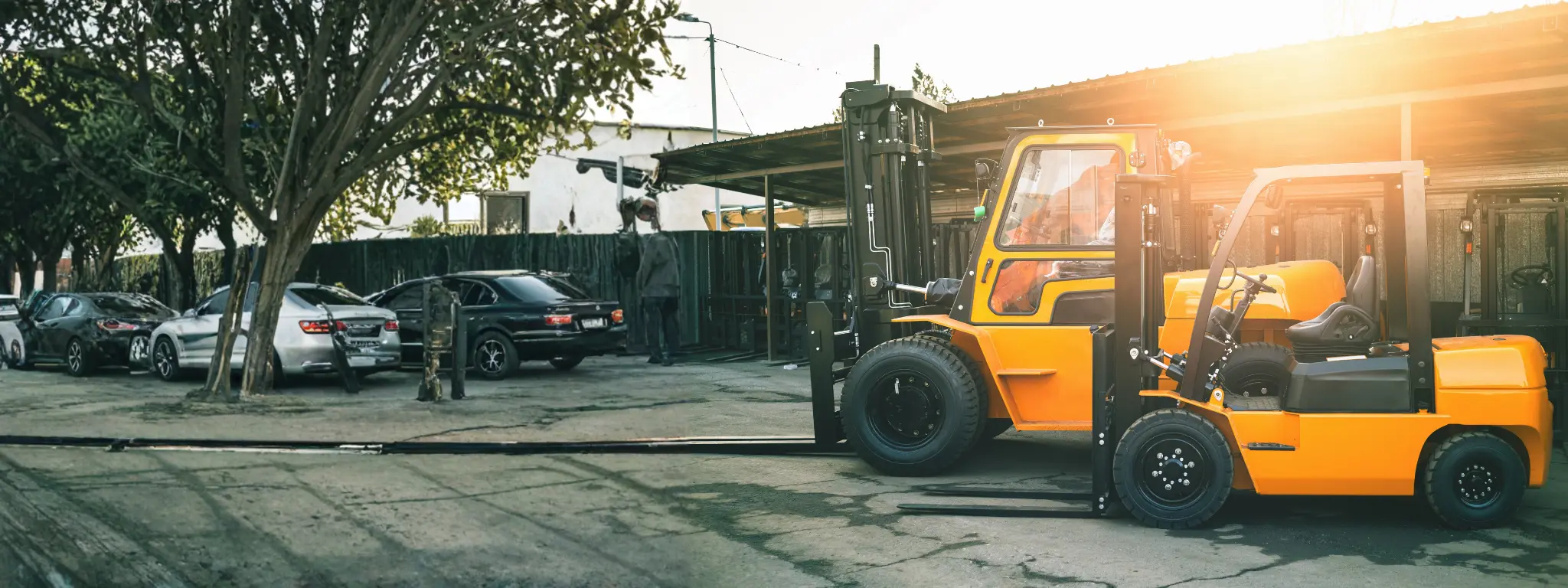
For construction, logistics, and industrial projects across Abu Dhabi, selecting the correct forklift capacity is crucial for operational efficiency and safety. Forklifts from 3 to 16 tonnes cover most material handling in the emirate, facilitating tasks from stacking pallets in warehouses to moving heavy components on large construction sites. Renting them keeps capital free and lets you match the truck to the job, allowing businesses to adapt quickly to project demands without the burden of ownership.
For the full fleet and availability, see forklift rental in Abu Dhabi.
Why Forklift Rental is Essential for Abu Dhabi Projects
Construction and industrial work in Abu Dhabi moves between sites and phases, so the equipment has to move with it. Renting forklifts provides numerous advantages over purchasing, particularly for projects with varying durations or specific lifting requirements. It eliminates the substantial upfront capital outlay, depreciation costs, and the ongoing expenses of maintenance, storage, and insurance. For businesses in the UAE, this approach preserves capital, improves cash flow, and allows for greater agility in resource allocation.
Consider a scenario where a contractor needs a 7-tonne forklift for a three-month project at Masdar City. Buying such a machine would tie up significant funds and require long-term commitment. Renting, however, allows them to acquire the precise equipment for the required period, returning it once the job is complete. That matters in a market where project scopes and timelines shift. To learn more about the financial benefits, read our guide to renting versus buying equipment in the UAE.
Understanding Forklift Capacities: 3 to 16 Tonne Range
The 3 to 16 tonne range covers a broad spectrum of material handling needs, from standard warehouse operations to heavy industrial lifting. Each capacity segment offers distinct advantages, making the right choice dependent on your specific project requirements.
3-5 Tonne Forklifts: The Workhorses of General Construction
Forklifts in the 3 to 5-tonne capacity are the most commonly rented machines in Abu Dhabi for general material handling. They are highly versatile and suitable for a wide array of applications. These machines excel in tasks such as:
- Warehousing and Logistics: Moving palletised goods, stacking, and loading/unloading trucks.
- Light Construction Sites: Transporting bricks, cement bags, scaffolding, and smaller pre-fabricated components.
- Retail and Commercial Projects: Handling deliveries and moving display materials.
- Manufacturing Facilities: Shifting raw materials and finished products within factories.
Their compact size and manoeuvrability suit tighter spaces, while still offering substantial lifting power. Most 3-5 tonne models are equipped with pneumatic tyres for both indoor and outdoor use on relatively even surfaces.
6-8 Tonne Forklifts: Balancing Power and Versatility
When your project demands more lifting power than a standard 5-tonne forklift but doesn’t require extreme heavy-duty capabilities, the 6 to 8-tonne range steps in. These machines handle medium to heavy lifting with a useful balance of strength and flexibility. Common applications include:
- Medium-Scale Construction: Handling larger pre-cast concrete sections, steel beams, or heavy machinery parts.
- Port and Freight Operations: Moving larger containers or crated goods within smaller port facilities or cargo yards.
- Heavy Manufacturing: Relocating substantial components and machinery in industrial settings.
- Oil and Gas Support: Handling pipes, valves, and equipment in non-hazardous zones, often requiring specific safety certifications.
These forklifts are built for tougher conditions and can often be fitted with various attachments to enhance their utility, such as specialised clamps or longer forks.
9-10 Tonne Forklifts: Heavy Lifting for Industrial and Large-Scale Sites
9 to 10-tonne forklifts are designed for demanding heavy lifting applications. These machines suit large-scale industrial projects, major construction sites, and heavy logistics operations where significant loads must be moved safely and efficiently. Their primary uses include:
- Large Construction Projects: Lifting substantial structural elements, heavy machinery, and large volumes of materials on major infrastructure developments.
- Pre-Cast Yards: Handling heavy concrete slabs, beams, and columns.
- Shipyards and Ports: Moving large marine components, heavy cargo, and containers.
- Heavy Industry: Managing large dies, moulds, and raw materials in steel mills, foundries, and heavy equipment manufacturing.
Operating these larger machines requires experienced and certified operators, and careful planning of the work area due to their size and weight. They typically come with powerful diesel engines, designed for continuous heavy-duty work.
11-16 Tonne Forklifts: Containers and the Heaviest Loads
At the top of the range, heavy forklifts from 11 up to 16 tonnes handle loads that are beyond a 10-tonne machine, without the set-up time of a crane. Amirah Equipment Rental supplies forklifts up to 16 tonnes for these heavy handling jobs. Typical uses include:
- Container and Port Yards: Moving loaded containers, heavy crates and large cargo within yards and laydown areas.
- Steel and Pipe Handling: Lifting long steel sections, coils and pipe bundles on industrial and oil and gas support sites.
- Heavy Precast and Machinery: Relocating large precast elements, generators and heavy plant components.
Heavy forklifts are larger and heavier machines, so plan for firm, level ground that can take their axle loads, wide travel routes and turning space, and longer forks or attachments matched to the load. As with any heavy machine, they should be run by experienced, certified operators.
Key Factors When Choosing Your Forklift in Abu Dhabi
Selecting the right forklift involves more than just capacity. Consider these critical factors specific to your project in Abu Dhabi:
- Lifting Capacity and Height: Clearly define the maximum weight you need to lift and the maximum height it needs to reach. Always factor in a safety margin.
- Site Conditions: Is the work primarily indoors or outdoors? What is the terrain like, smooth concrete, rough unpaved ground, or a mix? This determines tyre type (pneumatic, solid, cushion) and ground clearance needed.
- Fuel Type:
- Diesel Forklifts: Powerful, excellent for outdoor, heavy-duty work. Commonly used on construction sites in Abu Dhabi because they cope with heavy duty cycles and diesel is easy to get.
- Electric Forklifts: Ideal for indoor use, warehouses, and areas requiring low noise and zero emissions. Require charging infrastructure.
- LPG Forklifts: A good compromise for indoor/outdoor use, offering lower emissions than diesel but still requiring ventilation.
- Attachments: Do you need standard forks, or will you require specialised attachments like fork extensions, rotators, side shifters, or clamps for specific loads?
- Operator Licensing and Safety: In the UAE, forklift operators must hold valid licences and undergo safety training. Ensure your chosen rental company provides well-maintained machines that comply with local safety standards. The Ministry of Human Resources & Emiratisation (MoHRE) sets out comprehensive occupational safety and health standards for workplaces across the UAE, which includes the safe operation of machinery. You can find more information on these standards on the MoHRE website.
Rental Agreements and UAE Regulations
When renting a forklift in Abu Dhabi, understanding the rental agreement and adhering to local regulations is paramount. Key considerations include:
- Rental Duration and Terms: Clarify the rental period, extension options, and any early termination clauses. Daily, weekly, and monthly rates vary significantly.
- Maintenance and Servicing: Most reputable rental companies, like Amirah Equipment Rental, include routine maintenance and breakdown support in their agreements. Understand your responsibilities regarding daily checks and minor upkeep.
- Insurance: Ensure adequate insurance coverage for the equipment against damage, theft, and third-party liability. Clarify who is responsible for what.
- UAE VAT (Value Added Tax): As per Federal Tax Authority (FTA) regulations, a 5% VAT applies to equipment rental services in the UAE. Ensure your rental quote clearly itemises VAT charges.
- Site-Specific Requirements: For projects within ADNOC facilities or other critical infrastructure sites, specific passes like the CICPA Pass are often mandatory for personnel and equipment. Ensure your rental provider is familiar with these requirements. For details, refer to our guide to CICPA passes for ADNOC sites.
Hiring a Forklift from Amirah
We own and maintain our forklifts and dispatch them from our yard in Mussafah: 3, 3.5, 5, 7 and 10 tonne diesel machines, plus heavy forklifts up to 16 tonnes, and electric and rough-terrain models.
- Operators: a certified operator can be supplied with the machine, or your own qualified personnel can operate it.
- Hire terms: daily, weekly and monthly.
- Delivery: across Abu Dhabi from our Mussafah yard, and to Dubai and Sharjah on a planned basis.
- Controlled sites: CICPA passes and gate documentation are prepared for ADNOC facilities, ports and other restricted zones.
Send us the machine, the site and the dates and we will confirm availability and price. Call +971 2 886 9999 or request a quote. We confirm the machine before it leaves the yard.
What to Send Us for a Quote
Capacity needed and the heaviest load, the highest lift, whether the work is indoors or on rough ground, the site location and your dates. Send those and we will match the truck to the job.
Frequently Asked Questions About Forklift Rental in Abu Dhabi
What types of forklifts are available for rent in the 3-16 tonne range in Abu Dhabi?
In the 3-16 tonne range, you can typically rent a variety of counterbalanced forklifts powered by diesel, electric, or LPG. Diesel models are common for outdoor heavy-duty construction and industrial sites, while electric and LPG options are often chosen for indoor warehouse operations or areas requiring lower emissions.
Do I need a special licence to operate a rented forklift in the UAE?
Yes, in the UAE, all forklift operators must possess a valid operator certification for the class of forklift they are driving, and undergo specific safety training. Confirm which authority certifies the class of machine you are hiring, and keep the certificate on site for inspection. Rental companies will verify operator credentials to ensure compliance with local regulations.
What is typically included in a forklift rental agreement in Abu Dhabi?
A standard rental agreement usually includes the use of the forklift for a specified period, routine maintenance, and breakdown support. Fuel, operator wages, and insurance are generally separate, though some agreements may offer optional add-ons. Always clarify the inclusions and exclusions before signing.
How does VAT apply to forklift rental costs in the UAE?
As per Federal Tax Authority (FTA) regulations, a 5% Value Added Tax (VAT) is applied to all equipment rental services in the UAE, including forklift rentals. This tax will be added to the rental charges and must be paid to the rental company.
What is the largest forklift you can supply in Abu Dhabi?
Amirah Equipment Rental supplies forklifts up to 16 tonnes. For heavy loads, share the load weight and dimensions, lift height and ground conditions so the right machine and attachments can be matched to the job.