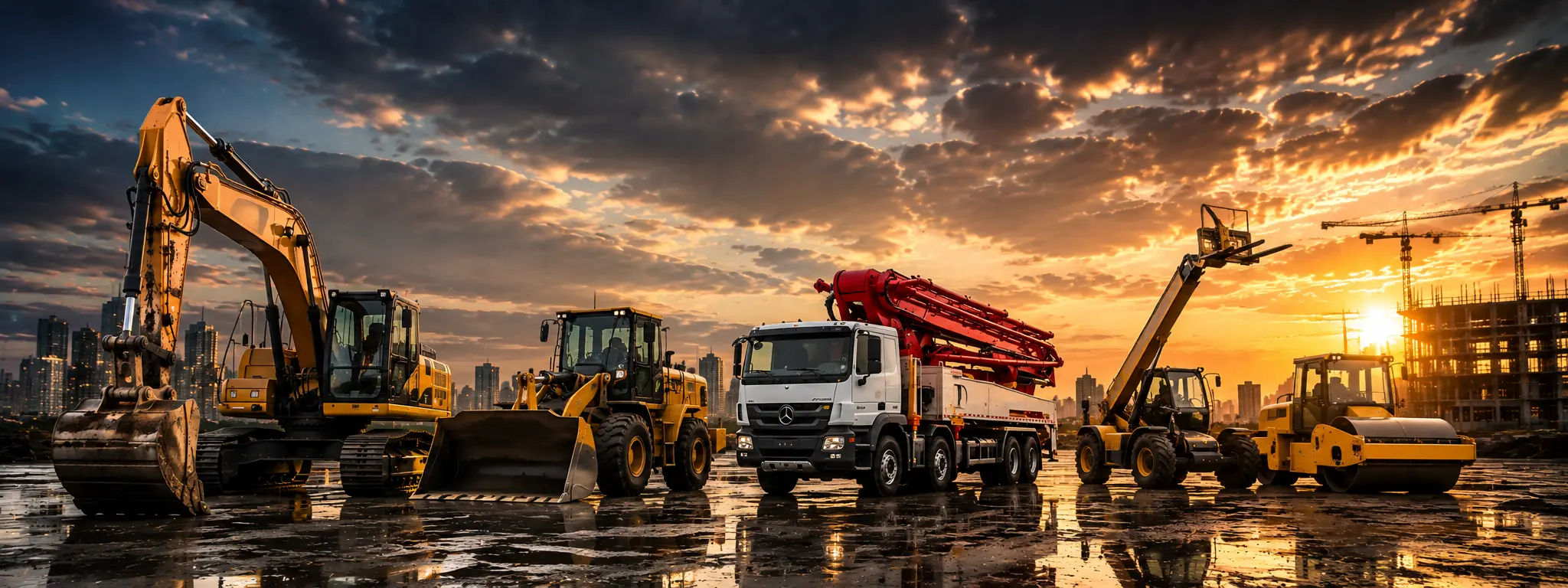
Every contractor eventually runs the numbers: keep renting, or buy the machine? The honest answer depends on utilisation — how many productive hours the equipment will actually work across the year — plus the hidden costs owners carry and renters don’t.

The Utilisation Rule of Thumb

Ownership starts to make sense when a machine works the majority of the year, every year, on predictable work. Below that, rental usually wins: you pay only for productive weeks, and the idle risk stays with the rental company.

What Owners Pay That Renters Don’t

  • Capital tied up (or financing cost) from day one
  • Maintenance, parts and workshop time
  • Storage and transport between sites
  • Registration, insurance and inspections
  • Operator employment through gaps between projects
  • Depreciation and resale risk in a fluctuating used-equipment market

What Renters Get Built In

  • Maintained, inspected machines with replacement cover
  • The right size machine for each job, not the one you happen to own
  • Certified operators on demand
  • Delivery, collection and no storage between projects
  • Predictable project-level costing for tenders

When Buying Wins

A machine central to your core business, working near-continuously, with your own workshop and operators — think a grading contractor’s own motor grader. If that’s your profile, buy the core machine and rent the peaks around it.

The Hybrid Approach Most UAE Contractors Land On

Own a small core fleet, rent everything project-specific: attachment-heavy machines, cranes, access platforms and anything for short phases. This keeps capital free and lets every tender price with current rental rates. For long programmes, ask about monthly and long-term rental terms — the rate curve changes significantly with duration.

Run Your Own Numbers

  • Estimate honest annual working hours for the machine
  • Total ownership cost: finance + maintenance + storage + insurance + operator + resale risk
  • Compare against rental for the same productive weeks
  • Re-check yearly: utilisation changes with your order book

Want a duration-based rental comparison for a specific machine? Request a quote or explore the full fleet.

Decided that renting fits your project better? For programmes running a month or longer, see our long-term equipment rental contracts in Abu Dhabi — monthly structures with maintenance, breakdown response and operators included.

Frequently Asked Questions About Renting Versus Buying

Is it cheaper to rent or buy construction equipment in the UAE?

It depends on utilisation. Ownership starts to make sense when a machine works the majority of the year, every year, on predictable work. Below that, renting usually wins, because you pay only for the productive weeks and the idle risk stays with the rental company.

What costs do owners carry that renters do not?

Capital tied up or financed from day one, maintenance, parts and workshop time, storage and transport between sites, registration, insurance and inspections, operator employment through the gaps between projects, and depreciation and resale risk.

What is included when you rent instead?

Maintained, inspected machines with replacement cover, the right size machine for each job rather than the one you happen to own, certified operators on demand, delivery and collection with no storage between projects, and predictable project-level costing for tenders.

When is buying the better decision?

When the machine is central to your core business, works near-continuously, and you have your own workshop and operators — a grading contractor’s own motor grader, for example. Most UAE contractors land on a hybrid: own a small core fleet, rent everything project-specific.

Do rental rates change for longer hires?

Yes. The rate curve changes significantly with duration, so monthly and long-term terms are quoted differently from daily hire; see long-term equipment rental in Abu Dhabi.
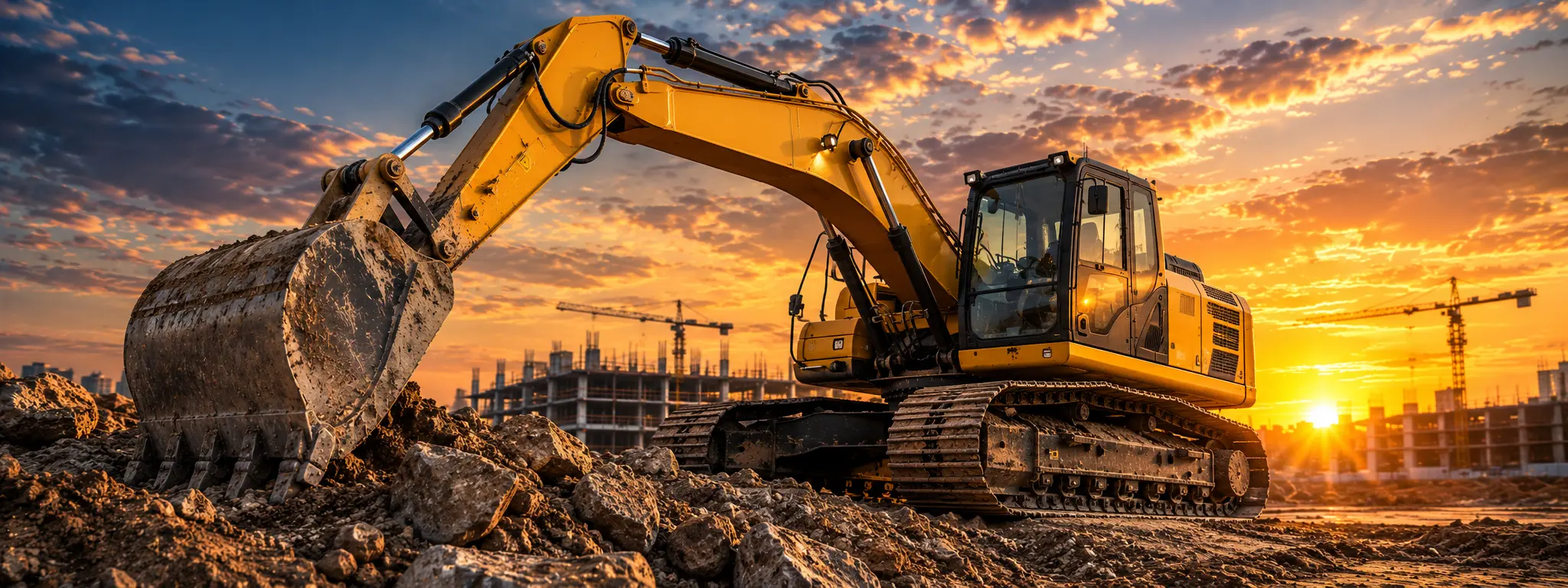
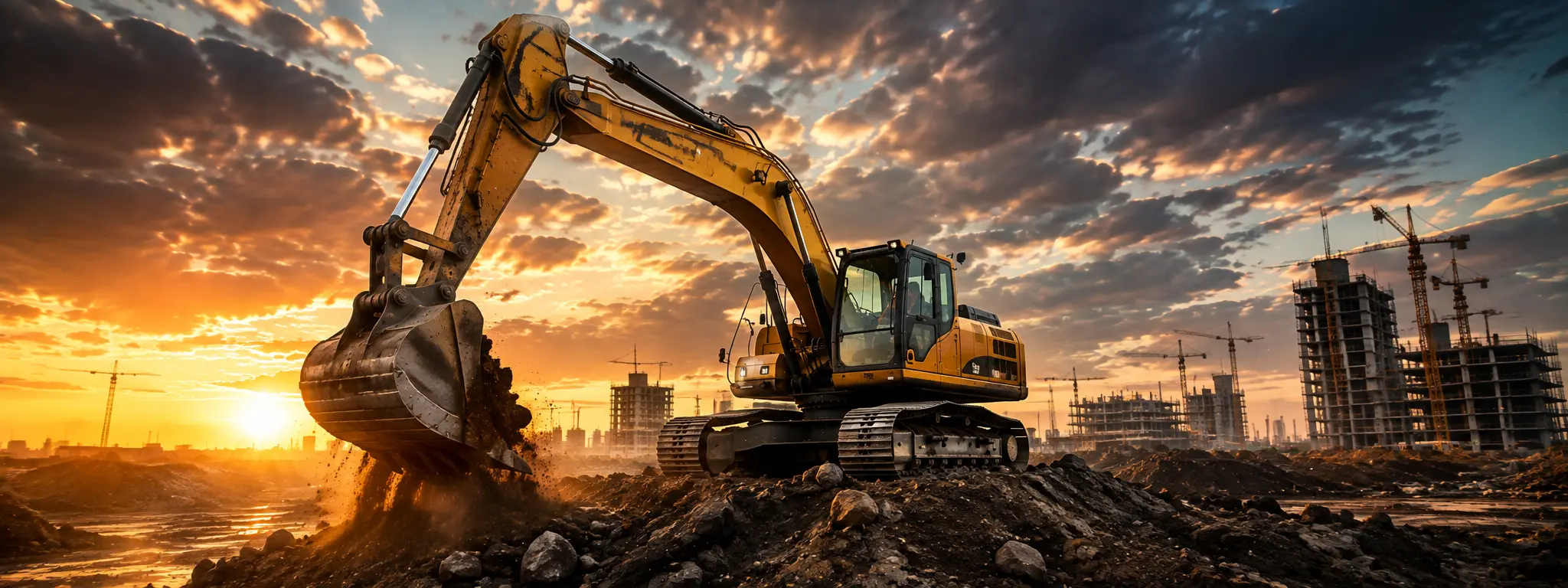
Choosing the wrong excavator class is one of the most common — and costly — rental mistakes on UAE sites: too small and production crawls, too large and you pay for transport, space and capacity you never use. This guide walks through the practical questions our team asks before recommending a machine.

Start with three questions

  • Dig depth & reach: how deep and how far from the machine’s position?
  • Site access: gates, working width, overhead constraints, finished surfaces?
  • Material & volume: sand, aggregate or rock, and how many cubic metres per day?

Mini Excavators (1.5–6 t)

The right call for confined urban plots, utility trenching, landscaping and works inside buildings. They pass through narrow gates, work next to structures and travel on finished surfaces with minimal damage. In Abu Dhabi’s tighter districts a mini excavator plus tipper often out-produces a larger machine that can’t position properly.

Medium Excavators (7–25 t)

The workhorse class for foundations, roadworks and general site preparation — the best balance of dig depth, bucket capacity and transport cost. Most commercial projects in Mussafah and ICAD run on machines in this range.

Large Excavators (30 t+)

Bulk earthworks, deep basements and infrastructure. Production per hour is unmatched, but plan for low-bed transport, working room and haul-truck capacity to match — a large excavator that waits on trucks earns nothing.

Wheeled vs Tracked

Tracked machines grip and float better on sand and rough ground; wheeled excavators shine on paved, urban and multi-location work where re-positioning speed matters and surfaces must be protected.

Do you need an operator?

For most rentals in Abu Dhabi the answer is yes — a certified operator is included or arranged through our operator support service, and is mandatory for CICPA and government sites.

Quick Sizing Reference

  • Villa/utility trench in the city → mini (3–5 t)
  • Commercial foundation, Mussafah → medium (14–22 t)
  • Bulk cut/fill or basement → large (30 t+)
  • Paved urban multi-site works → wheeled excavator

Ready to book? See excavator rental in Abu Dhabi or request a same-day quote — tell us the dig depth and site, and we’ll size the machine for you.

Excavator Classes at a Glance

ClassOperating weightTypical jobsSite suitability
Mini excavator~3 tonneTrenching, landscaping, utilities in tight accessVillas, interiors, congested urban plots
Midi excavator~5 tonneFoundations for low-rise, drainage, service roadsResidential and light commercial sites
Standard excavator~20 tonne (tracked or wheeled)Bulk excavation, basements, road formationMain construction and infrastructure sites
Heavy excavator (PC400 class)~40 tonneMass earthworks, deep excavation, quarry dutyLarge infrastructure and industrial projects
Long-boom excavator20 tonne+ with extended reachDeep trenching, dredging, slope shapingCanals, shorelines, deep basements
Excavator + jackhammerAny class with breakerRock breaking, demolition, asphalt removalDemolition and hard-ground sites

Not sure which class fits your ground conditions? Tell us the dig depth, material and truck cycle on the quote form and we will recommend the right machine — or see current availability for excavator rental in Abu Dhabi.

Frequently Asked Questions About Excavator Sizing

What size excavator do I need?

Start with three questions: how deep and how far you need to dig, what the site access allows (gates, working width, overhead constraints, finished surfaces), and the material and volume per day. A villa or utility trench in the city suits a 3–5 t mini, a commercial foundation a medium machine, and bulk cut and fill a large one.

What is a mini excavator used for?

Confined urban plots, utility trenching, landscaping and work inside buildings. Mini excavators pass through narrow gates, work next to structures and travel on finished surfaces with minimal damage — often out-producing a larger machine that cannot position properly.

Which excavator class suits foundations and roadworks?

The medium class (7–25 t) is the workhorse for foundations, roadworks and general site preparation, with the best balance of dig depth, bucket capacity and transport cost. Most commercial projects in Mussafah and ICAD run on machines in this range.

Should I hire a wheeled or a tracked excavator?

Tracked machines grip and float better on sand and rough ground. Wheeled excavators suit paved, urban and multi-location work, where repositioning speed matters and surfaces must be protected.

Do I need an operator with a rented excavator?

For most rentals in Abu Dhabi, yes — a certified operator is included or arranged through our operator support service, and is mandatory for CICPA and government sites.

Can I add a breaker to a rented excavator?

Yes. A hydraulic jackhammer or breaker can be supplied with the machine for rock breaking, demolition and asphalt removal; see excavator rental in Abu Dhabi.

If your project sits inside an ADNOC facility, a port or other critical infrastructure in Abu Dhabi, equipment and people don’t simply drive through the gate. The Critical Infrastructure and Coastal Protection Authority (CICPA) controls access — and rentals that ignore it lose days or weeks at mobilisation.

What CICPA Controls

CICPA regulates entry to Abu Dhabi’s strategic sites: oil & gas facilities, ports, islands and designated security zones. Both the machine and the operator need approval before they can enter a controlled site.

Who needs a pass?

  • Operators & drivers: individual CICPA passes tied to the person
  • Equipment: gate approval with documentation for each machine
  • The rental company: must be able to process and sponsor the applications

Typical Lead Times

Allow for processing time that varies by facility and pass type — from days for renewals to several weeks for new applications. The practical rule: engage your rental partner as soon as the award is likely, not when the site is ready. We start CICPA processing in parallel with mobilisation planning so machines clear the gate on day one.

What Documentation Travels with the Machine

  • Registration and insurance
  • Third-party inspection certificates where required
  • Operator certification and CICPA pass
  • HSE documentation aligned to the facility’s requirements

How Amirah Handles It

Operating from Mussafah with long experience on controlled sites, we supply CICPA-ready equipment and operators — cranes, forklifts and access platforms — with passes and paperwork arranged as part of the rental. See also Oil & Gas Equipment Rental in Abu Dhabi.

Planning Checklist

  • Confirm whether your site is CICPA-controlled at tender stage
  • Share facility details with your rental partner early
  • Book operators with the machines: passes are personal
  • Keep documentation copies on site for gate checks

Working on an ADNOC or controlled site? Request a quote with your site details and mobilisation date — we’ll handle the CICPA side.

Frequently Asked Questions About CICPA Passes

What does CICPA stand for?

CICPA is the Critical Infrastructure and Coastal Protection Authority, the Abu Dhabi authority that controls access to the emirate’s strategic sites: ADNOC oil and gas facilities, ports, islands and designated security zones.

How long does a CICPA pass take to process?

It varies by facility and pass type — from days for renewals to several weeks for new applications. The practical rule is to involve your rental partner as soon as the award looks likely, not when the site is ready, so the passes run in parallel with mobilisation planning.

How much does a CICPA pass cost?

Pass fees are set by the authority and depend on the pass type and duration, so there is no single figure. We process and sponsor the applications for the equipment and operators we supply, and confirm what applies to your job with the quote.

Who needs a CICPA pass — the machine or the operator?

Both. Operators and drivers hold individual passes tied to the person, and each machine needs gate approval with its own documentation. The rental company must be able to process and sponsor both, which is why operators should be booked with the machines rather than separately.

What documentation does the machine need at the gate?

Registration and insurance, third-party inspection certificates where the facility requires them, the operator’s certification and CICPA pass, and HSE documentation aligned to that facility’s requirements. Keep copies on site for gate checks.

Does CICPA apply outside Abu Dhabi?

No. CICPA is the Abu Dhabi authority, so it governs facilities, ports and security zones in the emirate. Sites in Dubai and Sharjah have their own access and permit rules, and the same machine and operator documentation is prepared for them.

Can Amirah arrange CICPA passes with the rental?

Yes. We supply CICPA-ready equipment and operators — cranes, forklifts and access platforms — with the passes and paperwork arranged as part of the hire; see CICPA-certified equipment rental in Abu Dhabi.

© 2026, All Rights Reserved, Amirah Equipment Rental. Privacy Policy  ·  Terms  ·  Cookies