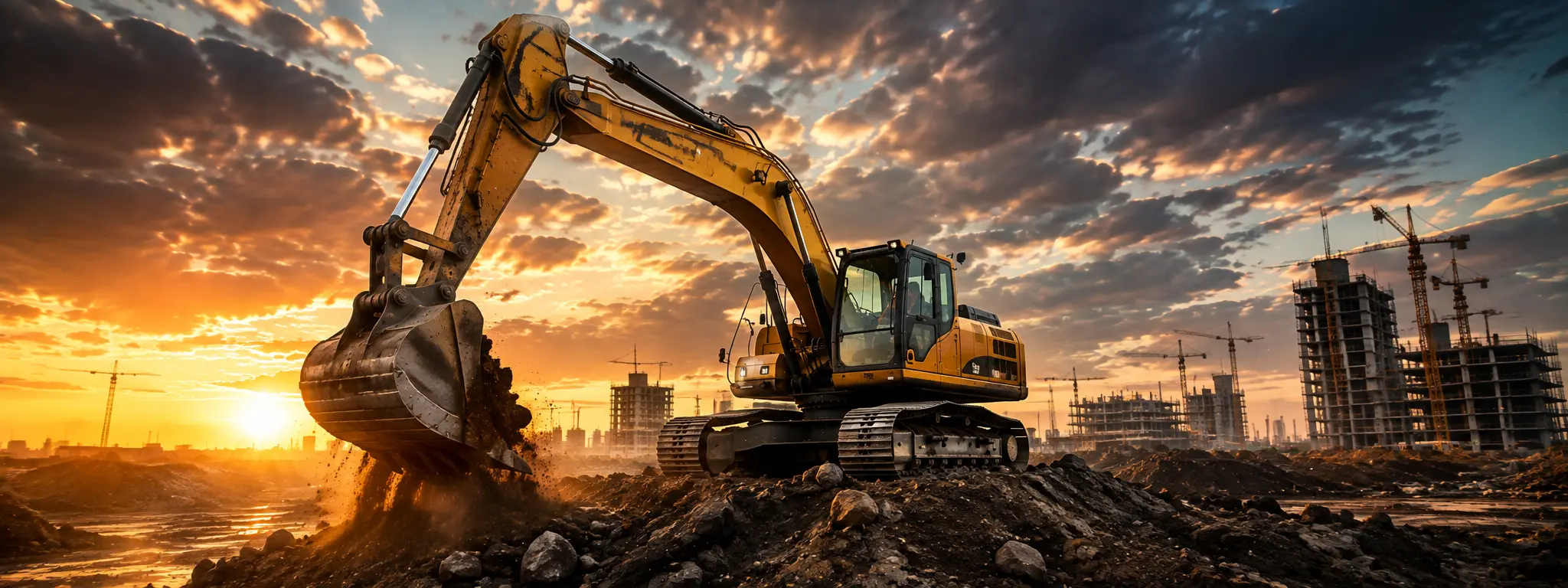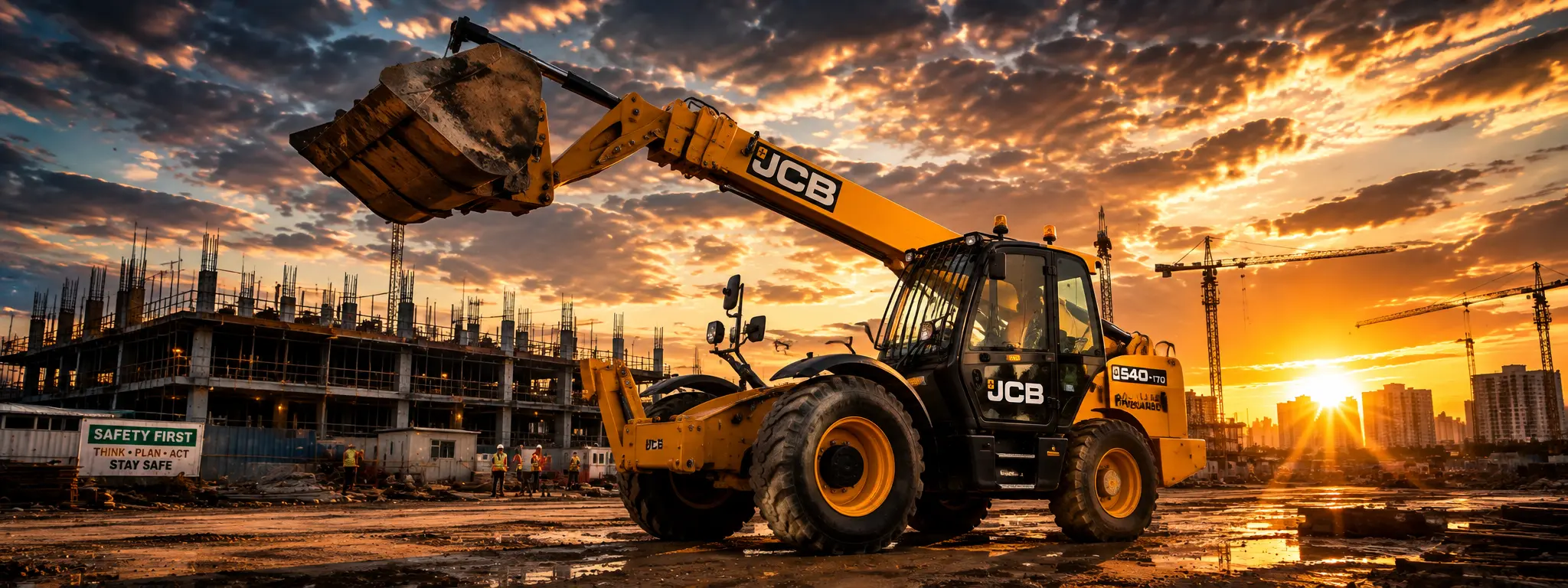
A boom loader, commonly known as a telehandler, is used for lifting and moving materials on construction sites across Abu Dhabi. With its telescopic boom, it combines the functions of a forklift, a crane, and a work platform, making it useful across projects ranging from high-rise building construction to industrial logistics within the emirate’s rapidly developing infrastructure. Amirah Equipment Rental owns and maintains its boom loaders, which are dispatched from our yard in Mussafah. Understanding the capabilities and rental considerations for these machines is crucial for efficient and safe operations.

What is a Boom Loader (Telehandler)?

At its core, a boom loader, or telehandler (short for telescopic handler), is a machine designed for lifting, moving, and placing materials at height or across obstacles. It features a telescopic boom that can extend both upwards and forwards, offering far greater versatility than a standard forklift. Its ability to attach various implements, such as forks, buckets, jibs, and work platforms, allows it to perform a multitude of tasks, significantly enhancing productivity on site. On Abu Dhabi sites, where the work often involves tight spaces, several floor levels and different materials in a day, the telehandler does the work of three machines.

Key Features of a Boom Loader:

  • Telescopic Boom: The defining feature, allowing for extended reach and height.
  • Versatile Attachments: Easily swap between forks for pallets, buckets for loose materials, jibs for suspended loads, and man baskets for work at height.
  • Rough Terrain Capability: Most models are equipped with four-wheel drive and heavy-duty tyres, making them suitable for challenging construction site conditions.
  • Stability: Designed with outriggers (on some models) and counterweights to ensure safe operation when lifting heavy loads at height.

Why Rent a Boom Loader for Your Abu Dhabi Project?

For contractors and businesses in Abu Dhabi, renting a boom loader often makes more financial and operational sense than purchasing one. The benefits are clear:
  1. Cost Efficiency: Avoid the significant upfront capital investment, depreciation, maintenance costs, and storage expenses associated with ownership. Renting allows you to allocate your budget more effectively to core project activities. For a deeper dive into the financial implications, read our guide on equipment rental vs. buying in the UAE.
  2. Project Specificity: Different projects demand different machine specifications. Renting gives you the flexibility to choose the exact boom loader size and capacity required for each specific task, avoiding the inefficiency of using an oversized or undersized owned machine.
  3. Reduced Maintenance Burden: Rental companies like Amirah Equipment Rental handle all routine maintenance, repairs, and inspections. This means less downtime for your project and no unexpected repair bills.
  4. Access to Modern Fleet: Rental fleets are regularly updated with the latest models, ensuring you have access to advanced technology, better fuel efficiency, and enhanced safety features without continuous investment.
  5. Storage and Logistics: Eliminate the need for secure storage facilities and the logistical challenge of transporting heavy equipment when not in use.

Key Applications: Where Boom Loaders Excel in Abu Dhabi

Abu Dhabi’s construction and industrial sectors cover projects ranging from new residential communities to massive infrastructure upgrades and oil and gas developments. Boom loaders are used across these applications:
  • High-Rise Construction: Lifting pallets of bricks, cement bags, rebar, and scaffolding materials to various floors.
  • Warehouse and Logistics: Efficiently moving heavy loads in large storage facilities, stacking materials, and loading/unloading trucks.
  • Façade Work: Positioning glass panels, cladding, and other exterior finishing materials at height using specialised attachments.
  • Infrastructure Projects: Assisting in bridge construction, roadworks, and utility installations by moving pipes, cables, and structural components.
  • Oil & Gas Facilities: Essential for maintenance, construction, and material handling within industrial plants and offshore supply bases, often requiring specific safety certifications and compliance, such as the CICPA Pass for ADNOC sites.
  • Events and Exhibitions: Setting up stages, lighting rigs, and temporary structures in large venues.

Choosing the Right Boom Loader Size

Consider these factors:

  • Maximum Reach and Height: Measure the highest point and furthest horizontal reach your materials need to go.
  • Load Weight: Determine the heaviest load you will need to lift. Always factor in a safety margin.
  • Site Conditions: Assess terrain, available space, and ground stability. Rough terrain models are essential for unpaved Abu Dhabi construction sites.
  • Attachments: Confirm what attachments are necessary for your tasks (e.g., standard forks, side-shift carriages, rotating forks, jib cranes, personnel work platforms, or buckets).

What to Check Before You Hire a Boom Loader in Abu Dhabi

Renting heavy equipment in Abu Dhabi comes with specific considerations to ensure compliance and smooth operations.
  1. Operator Certification and Licensing: All boom loader operators in the UAE must possess a valid heavy equipment operator licence. Confirm which authority certifies the class of machine you are hiring, and keep the certificate on site for inspection. Ensure your operators are fully qualified and experienced for the specific machine you are renting.
  2. Site Access and Safety: For projects within sensitive areas like ADNOC sites or other industrial zones, strict safety protocols and specific passes (e.g., CICPA pass) are mandatory. Your rental provider should be knowledgeable about these requirements.
  3. Rental Agreements and Insurance: Carefully review the rental contract, understanding terms regarding rental duration, payment schedules, responsibilities for fuel, minor repairs, and damage. Ensure adequate insurance coverage is in place for the equipment and potential liabilities.
  4. Delivery and Logistics: Plan for timely delivery and pickup of the boom loader to your Abu Dhabi site. Discuss transportation costs and logistics with your rental partner.
  5. Pre-Rental Inspection: Before accepting delivery, conduct a thorough inspection of the machine with the rental company representative. Document any existing damage or issues to avoid disputes later.
For official guidelines on construction safety and permits in Abu Dhabi, it’s advisable to consult the Abu Dhabi Municipality or the authority with jurisdiction over your site.

Cost Factors for Boom Loader Rental in Abu Dhabi

The cost of renting a boom loader in Abu Dhabi can vary based on several factors:
  • Rental Duration: Daily, weekly, and monthly rates are typically offered, with longer rental periods often providing a lower daily cost.
  • Machine Specifications: Larger machines with higher lift capacities and greater reach will command higher rental rates.
  • Attachments: Specialised attachments may incur additional rental fees.
  • Delivery and Pickup: Transportation costs to and from your site in Abu Dhabi will be factored in.
  • Operator Services: If you require a certified operator from the rental company, this will be an additional charge.
  • Fuel and Consumables: Generally, fuel is the responsibility of the renter. Discuss other consumables like lubricants.
  • Insurance: While basic insurance might be included, comprehensive coverage may be an additional cost or your responsibility.
  • Value Added Tax (VAT): As per UAE Federal Tax Authority (FTA) regulations, a 5% VAT will be applied to all rental services.
Always request a detailed quote that outlines all potential costs to avoid surprises.

Hiring a Boom Loader from Amirah

We own and maintain our boom loaders and telehandlers, and they are dispatched from our yard in Mussafah. Reach heights run from 12 m to 17 m, with forks, buckets, jibs and man baskets available on the same machine.

  • Operators: a certified operator can be supplied with the machine, or your own qualified personnel can operate it.
  • Hire terms: daily, weekly and monthly.
  • Delivery: across Abu Dhabi from our Mussafah yard.
  • Controlled sites: CICPA passes and gate documentation are prepared for ADNOC facilities, ports and other restricted zones.

Send us the machine, the site and the dates and we will confirm availability and price. Call +971 2 886 9999 or request a quote. We confirm the machine before it leaves the yard.

Frequently Asked Questions (FAQ)

What is the difference between a boom loader and a forklift?

A boom loader (telehandler) differs from a standard forklift primarily in its telescopic boom, which allows for greater lift height and forward reach, as well as the ability to work on rough terrain. Forklifts typically have fixed masts and are designed for lifting and moving loads on flat, paved surfaces, usually within warehouses or yards.

Do I need a special licence to operate a boom loader in Abu Dhabi?

Yes, operating a boom loader in Abu Dhabi requires a valid heavy equipment operator licence. Confirm which authority certifies the class of machine you are hiring, and keep the certificate on site for inspection. It is crucial that operators are properly certified and experienced to ensure safety and compliance.

What attachments are available for boom loaders?

Common attachments for boom loaders include standard forks for palletised loads, buckets for loose materials like sand or gravel, jibs or winches for suspended lifting (acting as a mini-crane), and personnel work platforms (man baskets) for access at height. Specialised attachments like tyre handlers or bale clamps are also available for specific industries.

How long can I rent a boom loader for?

Amirah Equipment Rental offers flexible rental periods for boom loaders in Abu Dhabi, ranging from daily to weekly and monthly contracts. Long-term hire for extended programmes is arranged on monthly terms. Your specific rental duration will be discussed and agreed upon in your rental agreement.

Ready to hire? See boom loader and telehandler rental in Abu Dhabi for reach heights, attachments and hire terms, or call +971 2 886 9999.
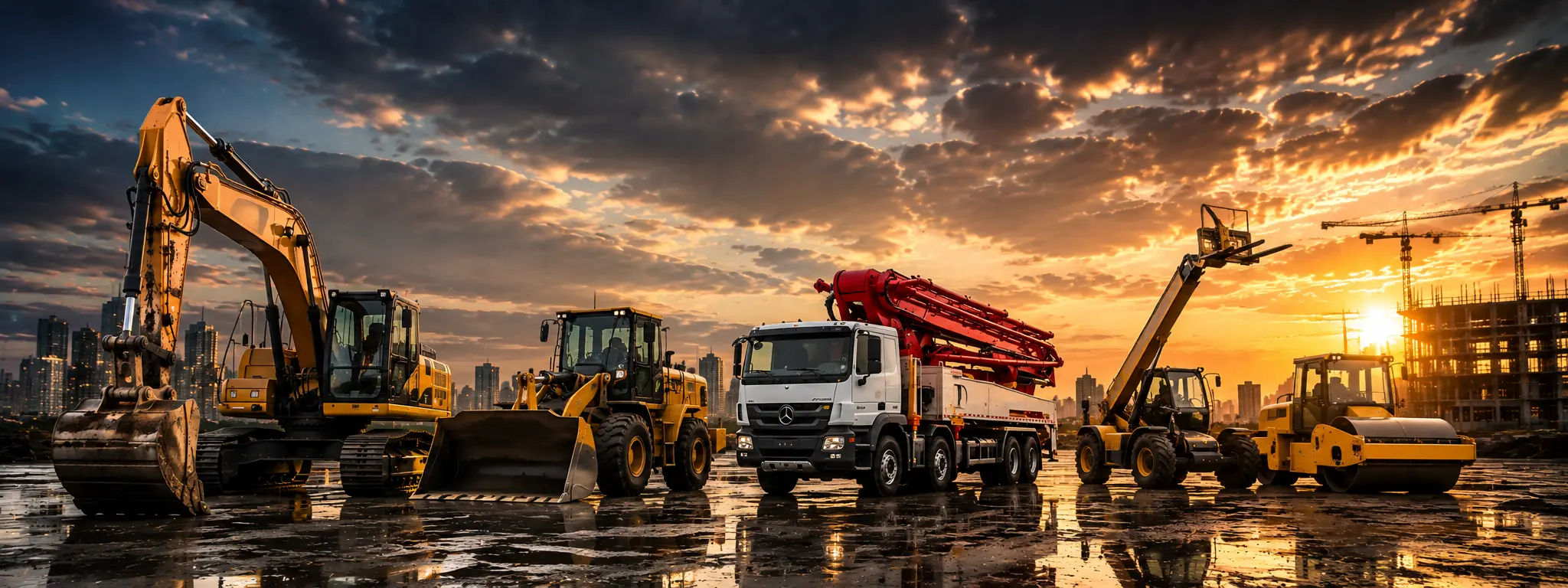
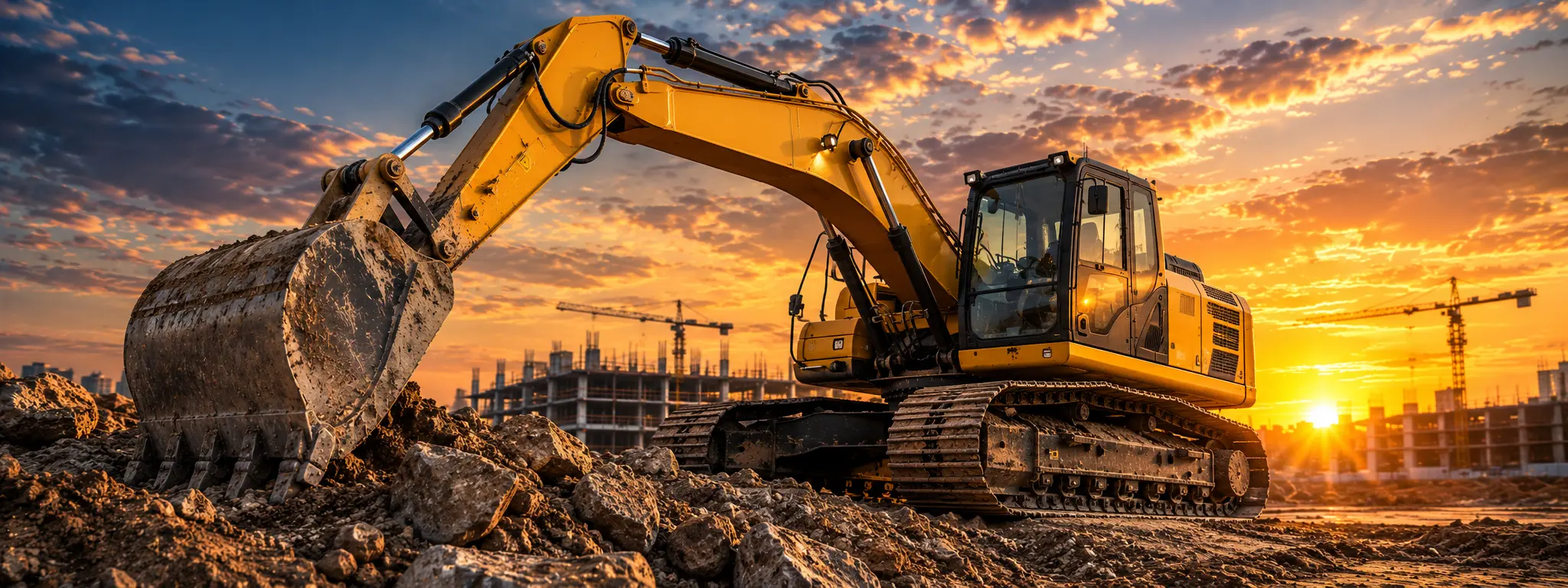
Every contractor eventually runs the numbers: keep renting, or buy the machine? The honest answer depends on utilisation — how many productive hours the equipment will actually work across the year — plus the hidden costs owners carry and renters don’t.

The Utilisation Rule of Thumb

Ownership starts to make sense when a machine works the majority of the year, every year, on predictable work. Below that, rental usually wins: you pay only for productive weeks, and the idle risk stays with the rental company.

What Owners Pay That Renters Don’t

  • Capital tied up (or financing cost) from day one
  • Maintenance, parts and workshop time
  • Storage and transport between sites
  • Registration, insurance and inspections
  • Operator employment through gaps between projects
  • Depreciation and resale risk in a fluctuating used-equipment market

What Renters Get Built In

  • Maintained, inspected machines with replacement cover
  • The right size machine for each job, not the one you happen to own
  • Certified operators on demand
  • Delivery, collection and no storage between projects
  • Predictable project-level costing for tenders

When Buying Wins

A machine central to your core business, working near-continuously, with your own workshop and operators — think a grading contractor’s own motor grader. If that’s your profile, buy the core machine and rent the peaks around it.

The Hybrid Approach Most UAE Contractors Land On

Own a small core fleet, rent everything project-specific: attachment-heavy machines, cranes, access platforms and anything for short phases. This keeps capital free and lets every tender price with current rental rates. For long programmes, ask about monthly and long-term rental terms — the rate curve changes significantly with duration.

Run Your Own Numbers

  • Estimate honest annual working hours for the machine
  • Total ownership cost: finance + maintenance + storage + insurance + operator + resale risk
  • Compare against rental for the same productive weeks
  • Re-check yearly: utilisation changes with your order book

Want a duration-based rental comparison for a specific machine? Request a quote or explore the full fleet.

Decided that renting fits your project better? For programmes running a month or longer, see our long-term equipment rental contracts in Abu Dhabi — monthly structures with maintenance, breakdown response and operators included.

Frequently Asked Questions About Renting Versus Buying

Is it cheaper to rent or buy construction equipment in the UAE?

It depends on utilisation. Ownership starts to make sense when a machine works the majority of the year, every year, on predictable work. Below that, renting usually wins, because you pay only for the productive weeks and the idle risk stays with the rental company.

What costs do owners carry that renters do not?

Capital tied up or financed from day one, maintenance, parts and workshop time, storage and transport between sites, registration, insurance and inspections, operator employment through the gaps between projects, and depreciation and resale risk.

What is included when you rent instead?

Maintained, inspected machines with replacement cover, the right size machine for each job rather than the one you happen to own, certified operators on demand, delivery and collection with no storage between projects, and predictable project-level costing for tenders.

When is buying the better decision?

When the machine is central to your core business, works near-continuously, and you have your own workshop and operators — a grading contractor’s own motor grader, for example. Most UAE contractors land on a hybrid: own a small core fleet, rent everything project-specific.

Do rental rates change for longer hires?

Yes. The rate curve changes significantly with duration, so monthly and long-term terms are quoted differently from daily hire; see long-term equipment rental in Abu Dhabi.

Choosing the wrong excavator class is one of the most common — and costly — rental mistakes on UAE sites: too small and production crawls, too large and you pay for transport, space and capacity you never use. This guide walks through the practical questions our team asks before recommending a machine.

Start with three questions

  • Dig depth & reach: how deep and how far from the machine’s position?
  • Site access: gates, working width, overhead constraints, finished surfaces?
  • Material & volume: sand, aggregate or rock, and how many cubic metres per day?

Mini Excavators (1.5–6 t)

The right call for confined urban plots, utility trenching, landscaping and works inside buildings. They pass through narrow gates, work next to structures and travel on finished surfaces with minimal damage. In Abu Dhabi’s tighter districts a mini excavator plus tipper often out-produces a larger machine that can’t position properly.

Medium Excavators (7–25 t)

The workhorse class for foundations, roadworks and general site preparation — the best balance of dig depth, bucket capacity and transport cost. Most commercial projects in Mussafah and ICAD run on machines in this range.

Large Excavators (30 t+)

Bulk earthworks, deep basements and infrastructure. Production per hour is unmatched, but plan for low-bed transport, working room and haul-truck capacity to match — a large excavator that waits on trucks earns nothing.

Wheeled vs Tracked

Tracked machines grip and float better on sand and rough ground; wheeled excavators shine on paved, urban and multi-location work where re-positioning speed matters and surfaces must be protected.

Do you need an operator?

For most rentals in Abu Dhabi the answer is yes — a certified operator is included or arranged through our operator support service, and is mandatory for CICPA and government sites.

Quick Sizing Reference

  • Villa/utility trench in the city → mini (3–5 t)
  • Commercial foundation, Mussafah → medium (14–22 t)
  • Bulk cut/fill or basement → large (30 t+)
  • Paved urban multi-site works → wheeled excavator

Ready to book? See excavator rental in Abu Dhabi or request a same-day quote — tell us the dig depth and site, and we’ll size the machine for you.

Excavator Classes at a Glance

ClassOperating weightTypical jobsSite suitability
Mini excavator~3 tonneTrenching, landscaping, utilities in tight accessVillas, interiors, congested urban plots
Midi excavator~5 tonneFoundations for low-rise, drainage, service roadsResidential and light commercial sites
Standard excavator~20 tonne (tracked or wheeled)Bulk excavation, basements, road formationMain construction and infrastructure sites
Heavy excavator (PC400 class)~40 tonneMass earthworks, deep excavation, quarry dutyLarge infrastructure and industrial projects
Long-boom excavator20 tonne+ with extended reachDeep trenching, dredging, slope shapingCanals, shorelines, deep basements
Excavator + jackhammerAny class with breakerRock breaking, demolition, asphalt removalDemolition and hard-ground sites

Not sure which class fits your ground conditions? Tell us the dig depth, material and truck cycle on the quote form and we will recommend the right machine — or see current availability for excavator rental in Abu Dhabi.

Frequently Asked Questions About Excavator Sizing

What size excavator do I need?

Start with three questions: how deep and how far you need to dig, what the site access allows (gates, working width, overhead constraints, finished surfaces), and the material and volume per day. A villa or utility trench in the city suits a 3–5 t mini, a commercial foundation a medium machine, and bulk cut and fill a large one.

What is a mini excavator used for?

Confined urban plots, utility trenching, landscaping and work inside buildings. Mini excavators pass through narrow gates, work next to structures and travel on finished surfaces with minimal damage — often out-producing a larger machine that cannot position properly.

Which excavator class suits foundations and roadworks?

The medium class (7–25 t) is the workhorse for foundations, roadworks and general site preparation, with the best balance of dig depth, bucket capacity and transport cost. Most commercial projects in Mussafah and ICAD run on machines in this range.

Should I hire a wheeled or a tracked excavator?

Tracked machines grip and float better on sand and rough ground. Wheeled excavators suit paved, urban and multi-location work, where repositioning speed matters and surfaces must be protected.

Do I need an operator with a rented excavator?

For most rentals in Abu Dhabi, yes — a certified operator is included or arranged through our operator support service, and is mandatory for CICPA and government sites.

Can I add a breaker to a rented excavator?

Yes. A hydraulic jackhammer or breaker can be supplied with the machine for rock breaking, demolition and asphalt removal; see excavator rental in Abu Dhabi.

If your project sits inside an ADNOC facility, a port or other critical infrastructure in Abu Dhabi, equipment and people don’t simply drive through the gate. The Critical Infrastructure and Coastal Protection Authority (CICPA) controls access — and rentals that ignore it lose days or weeks at mobilisation.

What CICPA Controls

CICPA regulates entry to Abu Dhabi’s strategic sites: oil & gas facilities, ports, islands and designated security zones. Both the machine and the operator need approval before they can enter a controlled site.

Who needs a pass?

  • Operators & drivers: individual CICPA passes tied to the person
  • Equipment: gate approval with documentation for each machine
  • The rental company: must be able to process and sponsor the applications

Typical Lead Times

Allow for processing time that varies by facility and pass type — from days for renewals to several weeks for new applications. The practical rule: engage your rental partner as soon as the award is likely, not when the site is ready. We start CICPA processing in parallel with mobilisation planning so machines clear the gate on day one.

What Documentation Travels with the Machine

  • Registration and insurance
  • Third-party inspection certificates where required
  • Operator certification and CICPA pass
  • HSE documentation aligned to the facility’s requirements

How Amirah Handles It

Operating from Mussafah with long experience on controlled sites, we supply CICPA-ready equipment and operators — cranes, forklifts and access platforms — with passes and paperwork arranged as part of the rental. See also Oil & Gas Equipment Rental in Abu Dhabi.

Planning Checklist

  • Confirm whether your site is CICPA-controlled at tender stage
  • Share facility details with your rental partner early
  • Book operators with the machines: passes are personal
  • Keep documentation copies on site for gate checks

Working on an ADNOC or controlled site? Request a quote with your site details and mobilisation date — we’ll handle the CICPA side.

Frequently Asked Questions About CICPA Passes

What does CICPA stand for?

CICPA is the Critical Infrastructure and Coastal Protection Authority, the Abu Dhabi authority that controls access to the emirate’s strategic sites: ADNOC oil and gas facilities, ports, islands and designated security zones.

How long does a CICPA pass take to process?

It varies by facility and pass type — from days for renewals to several weeks for new applications. The practical rule is to involve your rental partner as soon as the award looks likely, not when the site is ready, so the passes run in parallel with mobilisation planning.

How much does a CICPA pass cost?

Pass fees are set by the authority and depend on the pass type and duration, so there is no single figure. We process and sponsor the applications for the equipment and operators we supply, and confirm what applies to your job with the quote.

Who needs a CICPA pass — the machine or the operator?

Both. Operators and drivers hold individual passes tied to the person, and each machine needs gate approval with its own documentation. The rental company must be able to process and sponsor both, which is why operators should be booked with the machines rather than separately.

What documentation does the machine need at the gate?

Registration and insurance, third-party inspection certificates where the facility requires them, the operator’s certification and CICPA pass, and HSE documentation aligned to that facility’s requirements. Keep copies on site for gate checks.

Does CICPA apply outside Abu Dhabi?

No. CICPA is the Abu Dhabi authority, so it governs facilities, ports and security zones in the emirate. Sites in Dubai and Sharjah have their own access and permit rules, and the same machine and operator documentation is prepared for them.

Can Amirah arrange CICPA passes with the rental?

Yes. We supply CICPA-ready equipment and operators — cranes, forklifts and access platforms — with the passes and paperwork arranged as part of the hire; see CICPA-certified equipment rental in Abu Dhabi.

© 2026, All Rights Reserved, Amirah Equipment Rental. Privacy Policy  ·  Terms  ·  Cookies