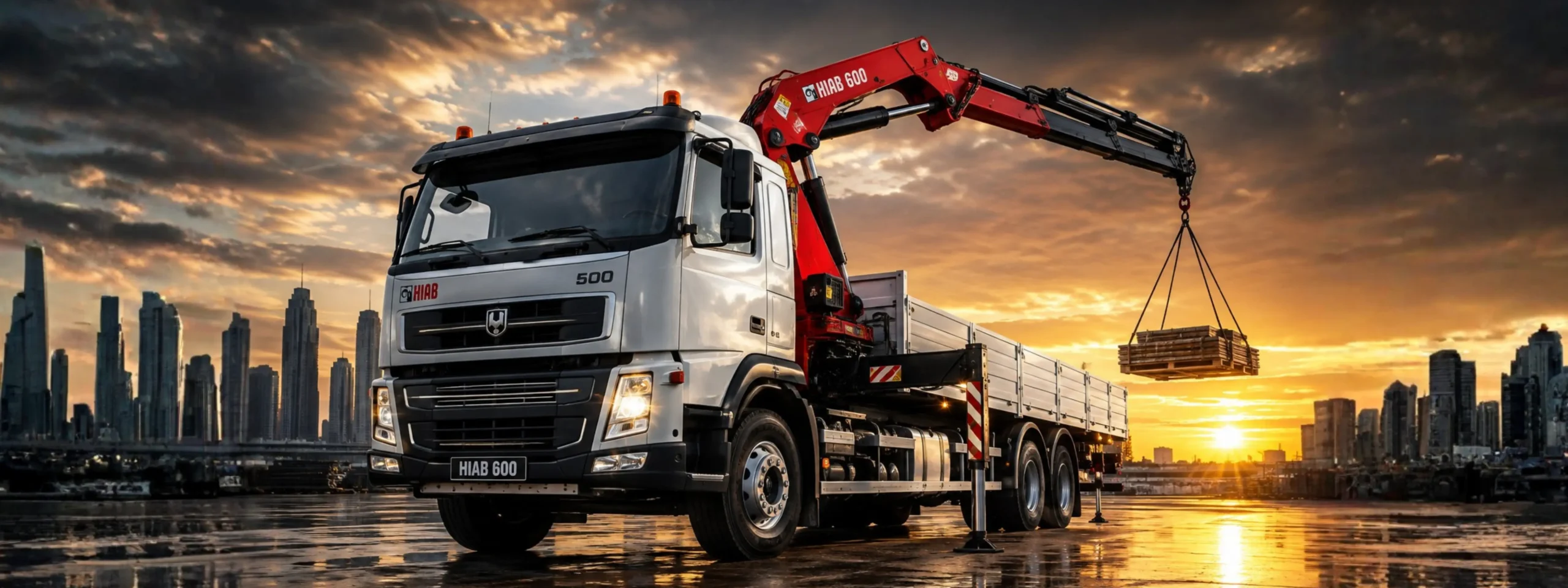
When it comes to efficiently handling heavy loads and transporting materials across diverse construction and industrial sites in Abu Dhabi, boom trucks, often referred to as Hiab cranes, do both jobs on one vehicle. These versatile machines combine the lifting capabilities of a crane with the transport functionality of a flatbed truck, offering a cost-effective and flexible solution for a wide array of projects, from infrastructure development to logistics and utility work.

What is a Boom Truck (Hiab Crane)?

A boom truck, or lorry loader, is a commercial truck chassis equipped with a hydraulic crane mounted behind the cab or at the rear of the vehicle. The ‘Hiab’ name is often used interchangeably with boom truck due to the brand’s pioneering role and widespread presence in the industry. Unlike traditional mobile cranes that are solely designed for lifting and require separate transport, boom trucks are self-sufficient: they can lift, load, and transport materials on their integrated flatbed, significantly streamlining operations.

These machines are essential for tasks requiring both lifting and transport, such as:

  • Material Delivery: Lifting and placing construction materials like steel beams, pre-cast concrete, or large pipes directly onto a site.
  • Equipment Relocation: Moving generators, compressors, or other heavy machinery within a project site or between different locations.
  • Utility Work: Assisting in the installation or maintenance of power poles, streetlights, and communication infrastructure.
  • Logistics: Loading and unloading cargo in warehouses or distribution centres.
  • Event Setup: Placing heavy structures or equipment for large-scale events.

Why Choose Boom Truck Rental in Abu Dhabi?

For businesses and contractors in Abu Dhabi, renting a boom truck offers significant advantages over outright purchase. Buying a new boom truck is a substantial capital commitment, and what it costs varies widely with capacity and features. Rental eliminates this upfront cost, along with ongoing expenses like maintenance, storage, and depreciation.

Here are key benefits of renting:

  • Cost Efficiency: Avoids large capital outlay, maintenance costs, insurance, and storage fees. Rental costs are typically project-specific, allowing better budget control. For a detailed comparison, see renting versus buying equipment in the UAE.
  • Flexibility: Access different boom truck sizes and capacities as project requirements change, ensuring you always have the right tool for the job without being tied to a single asset.
  • Reduced Downtime: Reputable rental companies like Amirah Equipment Rental maintain modern fleets, regularly serviced and inspected, minimising the risk of breakdowns and ensuring high operational reliability.
  • Access to Expertise: Many rentals come with certified operators who are familiar with Abu Dhabi site conditions and local safety standards.
  • Compliance & Regulations: Rental providers ensure their fleet and operators comply with UAE road transport regulations, safety standards, and specific site requirements, including those for ADNOC and other industrial zones.

Key Factors When Renting a Boom Truck in Abu Dhabi

Selecting the right boom truck for your project in Abu Dhabi requires careful consideration of several factors to ensure efficiency, safety, and compliance.

Lifting Capacity and Reach

The most crucial specifications are the boom truck’s lifting capacity (how much weight it can lift) and its reach (how far and high it can extend). These are typically expressed in tonne-metres, indicating the crane’s maximum lifting moment. For example, a 20 tonne-metre crane might lift 2 tonnes at a 10-metre radius, or 4 tonnes at a 5-metre radius.

  • Assess Load Weight: Accurately determine the heaviest items you need to lift and transport.
  • Consider Reach Requirements: Measure the maximum horizontal and vertical distance the crane needs to reach from its setup point.

Payload Capacity

Beyond lifting, the flatbed’s payload capacity is vital if you intend to transport materials. Ensure the truck can legally carry the combined weight of the lifted item and any other cargo on its bed, adhering to UAE road weight limits.

Site Accessibility and Terrain

Abu Dhabi sites run from dense urban plots to remote desert locations and industrial facilities, and each needs its own access plan.

  • Clearance: Check for overhead obstructions (power lines, bridges) and lateral obstructions (buildings, trees).
  • Ground Conditions: Ensure the ground is stable enough to support the boom truck’s weight, especially when the outriggers are deployed.
  • Manoeuvrability: Consider tight turns, narrow access roads, and general traffic conditions in areas like Mussafah, ICAD, or the city centre.

Operator Certification and Permits

Operating heavy machinery in the UAE is subject to strict regulations to ensure safety. All boom truck operators must hold valid heavy vehicle driving licences and crane operator certifications issued by relevant authorities. For projects on ADNOC sites, additional specific permits and operator passes, such as the CICPA Pass, are mandatory. You can learn more about these requirements in our guide to CICPA passes for ADNOC sites.

It’s also essential to verify any site-specific permits required by the Abu Dhabi Municipality or other relevant bodies for lifting operations, especially near public areas or major infrastructure. For workplace safety requirements in Abu Dhabi, the governing framework is the Abu Dhabi Occupational Safety and Health System Framework (OSHAD-SF), and site-specific guidance is published through the Tamm Abu Dhabi Government Portal.

Types of Boom Trucks and Their Applications

Boom trucks come in various configurations, each suited for different tasks.

Boom Truck Type Typical Lifting Capacity Common Applications in Abu Dhabi
Light-Duty 5–10 tonne-metre Small deliveries, urban logistics, minor installations, utility maintenance.
Medium-Duty 10–25 tonne-metre General construction, material handling for residential/commercial projects, equipment transport, signage installation.
Heavy-Duty 25–80+ tonne-metre Infrastructure projects, large-scale construction (e.g., bridges, industrial plants), heavy machinery relocation, specialised lifting tasks.

Safety Considerations for Boom Truck Operations in the UAE

Safety is paramount when operating any heavy equipment, especially boom trucks. Local and international safety standards are a regulatory requirement. In Abu Dhabi, companies must comply with the Abu Dhabi Occupational Safety and Health System Framework (OSHAD-SF) for workplace safety.

Key safety practices include:

  • Pre-Operational Checks: Daily inspections of the boom truck, including hydraulics, brakes, tyres, and safety systems.
  • Load Charts: Operators must strictly follow the manufacturer’s load charts to prevent overloading and ensure stability.
  • Outrigger Deployment: Proper setup and full extension of outriggers on stable ground are critical for preventing tip-overs.
  • Clearance & Spotters: Maintaining safe distances from power lines and other obstructions, often requiring a dedicated spotter.
  • Personal Protective Equipment (PPE): All personnel near the operation must wear appropriate PPE.
  • Regular Maintenance: Ensuring the boom truck is regularly serviced and certified by qualified technicians.

Hiring a Boom Truck from Amirah

We rent a 10 tonne Hiab truck with a 7 tonne crane, owned and maintained by us and dispatched from our yard in Mussafah. It lifts, loads and carries on one vehicle, so a delivery and a placement are a single hire.

  • Operators: a certified operator can be supplied with the machine, or your own qualified personnel can operate it.
  • Hire terms: daily, weekly and monthly.
  • Delivery: across Abu Dhabi from our Mussafah yard.
  • Controlled sites: CICPA passes and gate documentation are prepared for ADNOC facilities, ports and other restricted zones.

Send us the machine, the site and the dates and we will confirm availability and price. Call +971 2 886 9999 or request a quote. We confirm the machine before it leaves the yard.

Frequently Asked Questions (FAQ)

What is the typical rental duration for a boom truck in Abu Dhabi?

Rental durations can vary widely based on your project’s needs. Amirah Equipment Rental offers flexible options including daily, weekly, monthly, and long-term rentals. We recommend discussing your project timeline with our team to determine the most cost-effective and suitable rental period.

Do boom truck rentals from Amirah Equipment Rental include an operator?

Yes. For most boom truck hires we supply a certified operator. If your own personnel hold the heavy vehicle licence and the crane certification, the truck can be hired without one.

What information do I need to provide to rent the correct boom truck size?

To help us recommend the ideal boom truck, please provide details such as the maximum weight of the items to be lifted, the required lifting height and horizontal reach, the type of materials to be transported, the accessibility of your job site, and the duration of the rental. This information allows us to match you with the most suitable machine from our fleet.

Are there any specific permits required for operating a boom truck in Abu Dhabi?

Yes, specific permits may be required depending on the job site and nature of the work. Operators must have valid UAE heavy vehicle licences and crane certifications. Additionally, projects in industrial zones like ADNOC sites require specific passes (e.g., CICPA). We can advise you on the necessary permits and help ensure compliance with Abu Dhabi Municipality and other local regulations.

Ready to hire? See boom truck (Hiab) rental in Abu Dhabi for the spec, hire terms and delivery areas, or call +971 2 886 9999.
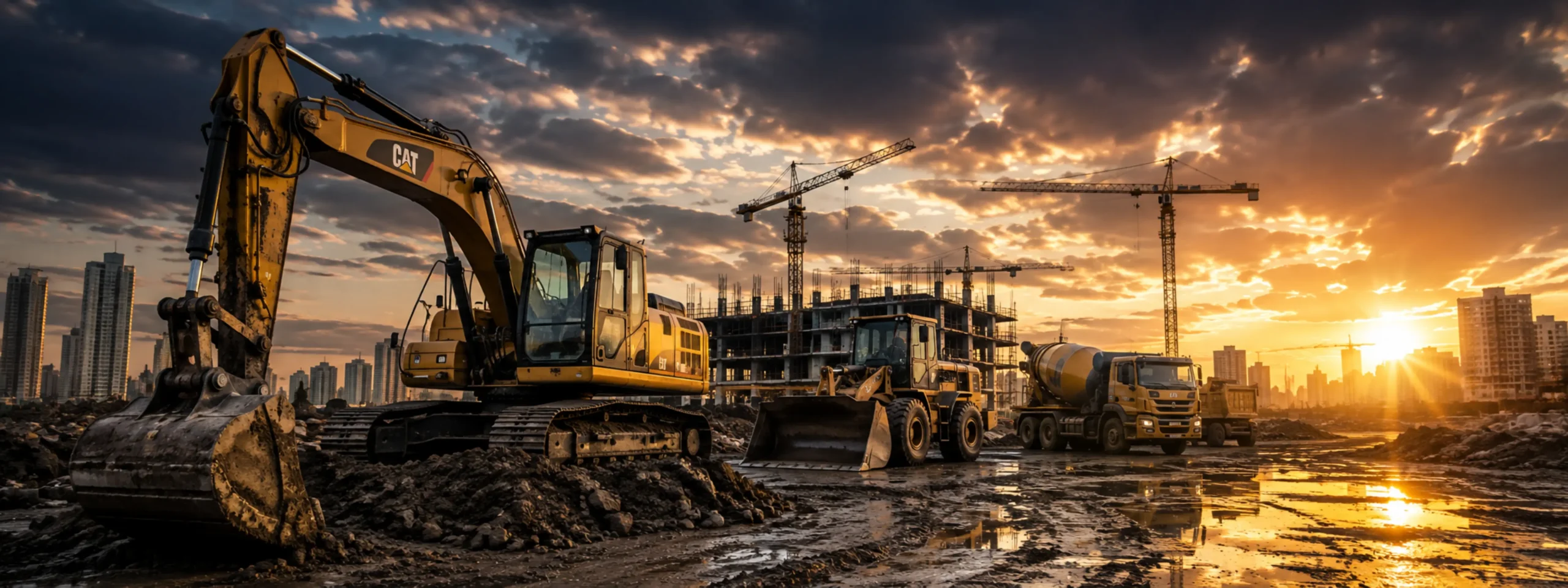
For businesses and contractors in the UAE construction sector, renting heavy equipment offers significant advantages, including cost efficiency, operational flexibility, and access to a modern, well-maintained fleet. This approach helps preserve capital, streamlines project management, and ensures compliance with local regulations, making it a preferred strategy for numerous projects across Abu Dhabi and the wider Emirates.

Understanding the UAE Construction Equipment Rental Market

The United Arab Emirates has a large and active construction market, particularly in Abu Dhabi, which continues to drive infrastructure and real estate projects. That demand carries through to heavy machinery, from excavators to forklifts, necessitating efficient equipment acquisition strategies. For many companies, outright purchase ties up substantial capital, introduces maintenance burdens, and risks equipment obsolescence.

Construction equipment rental in the UAE addresses these challenges by providing access to a diverse fleet without the long-term financial commitments. The market is characterised by competitive pricing, advanced machinery, and a strong emphasis on service and reliability, aligning with the stringent project requirements common in the region. Furthermore, businesses must consider the 5% Value Added Tax (VAT) regulated by the Federal Tax Authority (FTA) on rental services, which is a standard part of commercial transactions in the UAE. For more information on tax regulations, you can visit the official Federal Tax Authority (FTA) website.

Key Benefits of Construction Equipment Rental in the UAE

Opting for equipment rental over purchase presents several compelling benefits for businesses operating in the UAE, directly impacting their financial health and operational efficiency.

Cost Efficiency and Capital Preservation

One of the primary drivers for equipment rental is its significant cost advantage. Renting avoids the hefty upfront capital expenditure required to purchase heavy machinery, freeing up funds for other critical project investments or working capital. Beyond the initial cost, rental eliminates ongoing expenses such as:

  • Depreciation: Equipment value declines over time, a cost borne by the owner.
  • Maintenance and Repairs: Regular servicing, unexpected breakdowns, and parts replacement can be substantial.
  • Storage and Transportation: Secure storage facilities and logistics for moving equipment between sites are costly.
  • Insurance and Licensing: Annual insurance premiums and licensing fees add to ownership costs.

With rental, these costs sit with the rental provider, so the hire rate is predictable. To explore this further, read our guide to renting versus buying equipment in the UAE.

Flexibility and Access to Modern Fleet

Construction projects in the UAE often require different types of equipment for varying durations. Rental provides unparalleled flexibility:

  • Scalability: Easily scale your equipment fleet up or down based on project demands, without being stuck with underutilised assets.
  • Latest Technology: Access to a modern, well-maintained fleet featuring the latest advancements in efficiency, safety, and environmental compliance. This ensures optimal performance and adherence to evolving industry standards.
  • Project-Specific Needs: Acquire specialist machinery for unique tasks without committing to a long-term purchase, ensuring you always have the right tool for the job.

Reduced Operational Burdens

Rental companies like Amirah Equipment Rental handle many of the operational complexities associated with heavy machinery, allowing your team to focus on core construction tasks. This includes:

  • Maintenance and Servicing: Regular preventative maintenance and urgent repairs are managed by the rental provider’s expert technicians.
  • Compliance: Ensuring equipment meets all local safety standards, environmental regulations, and operational certifications.
  • Breakdown Support: Prompt technical support and replacement equipment in case of breakdowns, minimising costly project delays.

Types of Construction Equipment Available for Rent in the UAE

What construction equipment is most commonly rented in the UAE?

The most commonly rented construction equipment in the UAE is earthmoving machinery (excavators, wheel loaders and backhoe loaders), lifting and material handling equipment (forklifts, telehandlers and mobile cranes), road building equipment (motor graders and road rollers), compaction equipment, and heavy haulage trailers for moving machines between sites.

The range of construction equipment available for rent in the UAE is vast, catering to virtually every project requirement. Here are some of the most commonly rented categories:

  • Earthmoving Equipment: Essential for excavation, trenching, grading, and material handling.
  • Excavators: Ranging from mini excavators for confined spaces to large hydraulic excavators for major earthworks. For guidance on selecting the right size, see our article on choosing the right excavator size.
  • Wheel Loaders: Ideal for loading trucks, moving aggregates, and general site cleanup.
  • Backhoe Loaders: Versatile machines combining the functions of a loader and an excavator.
  • Lifting and Material Handling Equipment: Crucial for vertical and horizontal movement of materials.
  • Forklifts: Various types (diesel, electric, rough terrain) for lifting and transporting palletised goods.
  • Telehandlers (Boom Loaders): Multi-purpose machines with telescopic booms for lifting, reaching, and placing materials at height. Explore their use in our guide to boom loader rental in Abu Dhabi.
  • Cranes: Mobile cranes for heavy lifting operations.
  • Road Building Equipment: Specialised machinery for infrastructure development.
  • Motor Graders: For creating flat surfaces during road construction and site preparation.
  • Road Rollers (Compactors): Used for compacting soil, asphalt, and other materials.
  • Compaction Equipment: Beyond road rollers, this includes plate compactors and rammers for smaller-scale soil compaction.
  • Heavy Haulage: Low-bed trailers and flatbed trailers for transporting heavy machinery to and from project sites.

Factors Influencing Construction Equipment Rental Costs in the UAE

Understanding the elements that determine rental costs is crucial for effective budget planning. Key factors include:

  • Equipment Type and Size: Larger, more specialised, or higher-capacity machinery will naturally command higher rental rates.
  • Rental Duration: Rates are typically structured daily, weekly, or monthly. Longer rental periods often come with discounted daily rates.
  • Operating Hours: Exceeding standard operating hours (e.g., 8-10 hours per day) may incur additional charges.
  • Delivery and Collection Fees: The cost of transporting equipment to and from your site, especially for remote locations or within specific zones like Abu Dhabi, can vary.
  • Operator Inclusion (Wet vs. Dry Rental):
  • Dry Rental: You rent the equipment only and provide your own certified operator.
  • Wet Rental: The rental includes both the machinery and a skilled operator, often at a higher rate but offering convenience and expertise.
  • Fuel: Typically, fuel is not included in the rental price and is the responsibility of the renter.
  • Insurance: While rental companies usually have basic insurance, it’s vital to clarify coverage. You might need to arrange supplementary project-specific insurance.
  • Project-Specific Requirements: Certain projects, especially those on government or ADNOC sites, require special permits like a CICPA pass, which can affect logistics and associated costs. Our guide to CICPA passes for ADNOC sites offers detailed insights.

How to Choose the Right Equipment Rental Partner in the UAE

Selecting a reliable equipment rental partner is as important as choosing the equipment itself. Consider these critical aspects:

  1. Reputation and Experience: Look for companies with a proven track record, positive client testimonials, and extensive experience in the UAE market, particularly in your project’s region like Abu Dhabi.
  2. Fleet Size and Diversity: A broad selection of modern, well-maintained equipment ensures they can meet diverse project demands and offer suitable alternatives if needed.
  3. Maintenance Standards and Reliability: Inquire about their maintenance protocols. Reliable equipment minimises downtime and keeps your project on schedule.
  4. Customer Service and Support: Evaluate their responsiveness, technical support, and availability for emergency breakdowns. Ask for their support hours and breakdown response in writing.
  5. Transparent Pricing and Contract Terms: Ensure all costs, including delivery, fuel, insurance, and potential overtime charges, are clearly outlined in the rental agreement. Understand the terms regarding damage, liability, and early termination.
  6. Safety Compliance: Verify that their equipment and operations adhere to all local and international safety standards and regulations.
  7. Geographic Coverage: Confirm they can efficiently serve your project locations across the UAE, with a strong presence in key areas like Abu Dhabi.

Hiring Construction Equipment from Amirah

We own and maintain the fleet: excavators from 3 tonnes to the Komatsu PC400 class, Caterpillar 950 and 966 wheel loaders, motor graders, forklifts from 3 to 16 tonnes, telehandlers, mobile cranes from 25 to 100 tonnes, access platforms, rollers, tippers and site lighting.

  • Operators: a certified operator can be supplied with the machine, or your own qualified personnel can operate it.
  • Hire terms: daily, weekly and monthly.
  • Delivery: across Abu Dhabi from our Mussafah yard, and to Dubai and Sharjah on a planned basis.
  • Controlled sites: CICPA passes and gate documentation are prepared for ADNOC facilities, ports and other restricted zones.

Send us the machine, the site and the dates and we will confirm availability and price. Call +971 2 886 9999 or request a quote. We confirm the machine before it leaves the yard.

Frequently Asked Questions (FAQ)

What is the typical duration for construction equipment rental in the UAE?

Rental durations in the UAE are highly flexible, ranging from daily to weekly, monthly, or even long-term contracts spanning several months or years. The best duration depends on your project timeline and budget, with longer terms often offering more favourable daily rates.

Is an operator included with construction equipment rental in the UAE?

This depends on whether you opt for a ‘dry rental’ (equipment only) or a ‘wet rental’ (equipment with a certified operator). Many companies, including Amirah Equipment Rental, offer both options to cater to varying client needs. It’s crucial to specify your preference when requesting a quote.

What are the typical payment terms for equipment rental in the UAE?

Payment terms usually involve an upfront deposit, followed by regular payments (e.g., monthly) as per the contract. Invoices will include the 5% UAE VAT. Always clarify the payment schedule, accepted methods, and any late payment penalties with your rental provider beforehand.

Do I need special permits for equipment operation in the UAE?

Yes, depending on the type of equipment, its size, and the project location (e.g., public roads, restricted zones like ADNOC sites), various permits may be required. Your rental partner can often advise on or assist with obtaining necessary permits, such as a CICPA pass for specific industrial areas. Ensuring compliance is the responsibility of the project contractor.

Where can I rent construction equipment in Abu Dhabi?

Amirah Equipment Rental supplies construction equipment from its Mussafah yard in Abu Dhabi, including excavators, forklifts, boom lifts, scissor lifts and mobile cranes, on daily, weekly and monthly hire with UAE-wide delivery. Call +971 2 886 9999 for a quote.

© 2026, All Rights Reserved, Amirah Equipment Rental. Privacy Policy  ·  Terms  ·  Cookies