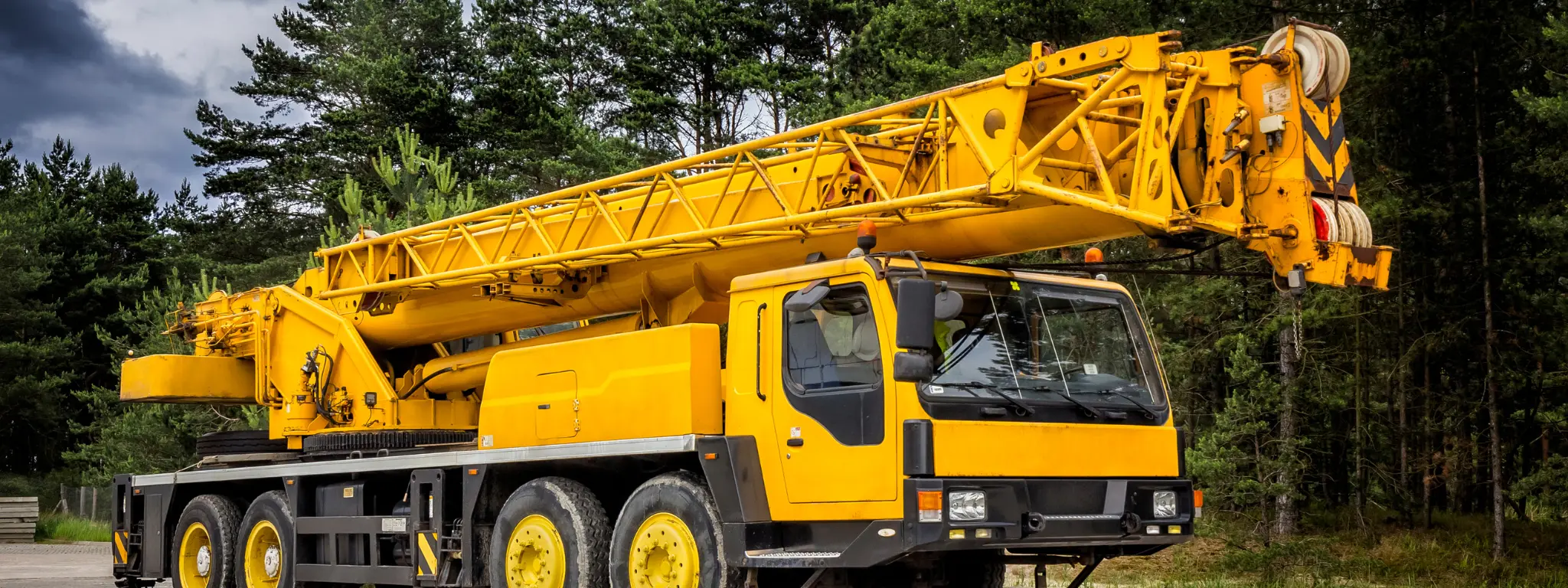
Excavator rental in Abu Dhabi runs from 3 and 5 tonne mini machines up to the Komatsu PC400 class at about 40 tonnes, on daily, weekly or monthly hire, as dry hire or wet hire with a certified operator. What you pay depends on operating weight, attachments, hire length and where the machine has to travel, so we quote per job rather than publish a rate card. Machinery working on Abu Dhabi sites must meet Department of Municipalities and Transport regulations, carry a valid third-party inspection (TPI) certificate, and hold the safety documentation required for industrial zones.

Selecting the right excavator configuration ensures your project maintains schedule efficiency while controlling operating expenditure. From utility trenching in Mussafah to large-scale infrastructure earthworks in Khalifa City or Ruwais, machine selection depends on soil conditions, bucket capacities, and depth requirements.

Excavator Size Classes for Abu Dhabi Worksite Requirements

Matching machine tonnage to earthmoving requirements prevents budget overruns and operational delays on site.

Mini and Midi Excavators (3 and 5 Tonne)

Our 3 and 5 tonne mini and midi excavators handle urban trenching, utility installation, drainage, low-rise foundations and landscaping on tight sites. Featuring short tail-swing designs, these units manoeuvre easily around existing structures.

Medium Excavator (20 Tonne)

The 20-tonne crawler excavator remains the workhorse of the UAE civil construction sector. These machines deliver balanced breakout force, reach, and stability for foundation excavation, road construction, and deep pipeline installations across sandy or consolidated terrain.

Heavy Excavator (Komatsu PC400, About 40 Tonne)

Heavy-class excavators target mass earthmoving, quarrying, and rock excavation. Fitted with a heavy-duty hydraulic hammer, our Komatsu PC400 class machines, about 40 tonnes, break caprock, hard limestone, and dense gypcrete common in the Abu Dhabi subsurface.

Excavator Class Operating Weight Primary Applications
Mini excavator 3 tonne Trenching, utilities and landscaping in tight access
Midi excavator 5 tonne Low-rise foundations, drainage and confined sites
Medium excavator (tracked or wheeled) 20 tonne Bulk excavation, roadworks, basements and site clearance
Heavy excavator (Komatsu PC400 class) About 40 tonne Mass earthworks, deep excavation and rock breaking
Long-boom excavator 20 tonne, extended reach Deep trenching, dredging and slope shaping

Essential Attachments for Abu Dhabi Subsurface Conditions

Abu Dhabi soil conditions vary from soft coastal sands to hard gypcrete and dense calcarenite rock. Standard earthmoving buckets are often insufficient for deep excavation without specialised attachments.

  1. Hydraulic Breakers (Rock Hammers): Heavy-duty breakers cut through hard caprock and concrete structures during site demolition or foundation works.
  2. Trenching and Heavy-Duty Buckets: Reinforced rock buckets with forged teeth withstand abrasive sandstone and coral rock conditions.
  3. Augers and Earth Drills: Used for drilling piling holes, fence posts, and utility pole footings without extensive ground disturbance.

Key Factors Influencing Excavator Hire Pricing

Understanding rental pricing structures helps contractors budget accurately for short-term projects or extended site development programmes.

  • Hire Duration: Daily rates carry higher overheads, whereas monthly or long-term contracts offer reduced daily equipment rates.
  • Wet Hire vs Dry Hire: Wet hire includes a certified operator and routine daily maintenance, while dry hire supplies the machine alone, requiring the contractor to furnish a licensed operator and fuel supply.
  • Attachment Selection: Adding a hydraulic breaker or specialised bucket incurs an additional daily or monthly surcharge above the base machine rental cost.
  • Mobilisation Logistics: Moving heavy excavators on lowbed trailers from Mussafah industrial hubs to remote sites like Al Dhafra or Ruwais incurs transport charges based on distance and route permits.

Regulatory Compliance and Site Access Standards in Abu Dhabi

Operating heavy machinery in Abu Dhabi requires strict adherence to safety and municipal regulations. Contracting companies must ensure equipment meets municipal and industrial zone entry rules.

Third-Party Inspection (TPI) Certification

Every excavator operating on a UAE job site must possess a current TPI certificate issued by an accredited inspection body that the project specification or the site owner accepts. TPI safety checks examine hydraulic lines, structural welds, cabin roll-over protective structures (ROPS) and emergency cutoff systems. Inspection covers the operator as well as the machine: every excavator we supply on wet hire comes with an operator certified for that class of machine, and we send both the machine and the operator certificates with the mobilisation paperwork.

CICPA and ADNOC Pass Approval

Projects located within critical infrastructure zones, oil fields, or refinery campuses require Critical Infrastructure and Coastal Protection Authority (CICPA) gate passes. Excavators entering these zones must pass stringent safety inspections, feature spark arrestors, external fire extinguishers, and carry valid driver/operator security clearances.

Steps to Rent an Excavator in Abu Dhabi

To ensure rapid deployment and avoid site downtime, follow this straightforward hiring procedure:

  1. Define Site Scope: Determine required digging depth, reach, material density, and ground clearance.
  2. Select Attachment Requirements: Specify whether standard buckets, heavy rock buckets, or hydraulic breakers are required.
  3. Verify Site Clearance Requirements: Confirm if the job site requires standard Abu Dhabi Municipality passes or specialised CICPA/ADNOC gate clearances.
  4. Review Transport and Access Points: Ensure lowbed transport trailers can access the site offloading area safely.
  5. Finalise Rental Terms: Choose between short-term hire or flexible long-term equipment rental in Abu Dhabi to optimise project cash flow.

Reliable Excavator Hire from Amirah Equipment Rental

Amirah Equipment Rental supplies fully inspected earthmoving machinery for UAE construction projects. Operating from key strategic supply hubs, we provide contractors with quality-assured industrial equipment, with certified operators and field service support.

Whether you need a 3 tonne mini excavator for urban utility work or a 40 tonne Komatsu PC400 with a hydraulic rock breaker for major civil infrastructure, our fleet is certified for immediate mobilisation across Abu Dhabi, Mussafah and the Western Region. Send us the machine, dates and site and we will confirm availability and price.

Frequently Asked Questions

What is the daily cost to rent an excavator in Abu Dhabi?

It depends on the machine and the job. The main factors are operating weight, whether you need wet hire with an operator or dry hire, which attachments you need such as a hydraulic breaker, how long you need it, and how far the lowbed has to travel. Send us the machine, dates and site and we will come back with a firm price.

Are operators included in Abu Dhabi excavator rental contracts?

Yes, standard hires are structured as wet hire, which includes a certified operator trained in UAE site safety protocols. Dry hire options without an operator are available for contractors with certified in-house operators.

What safety certificates are required for excavators working in Abu Dhabi?

Excavators must hold a valid Third-Party Inspection (TPI) certificate from an accredited UAE testing agency. For projects in oil, gas, or coastal infrastructure zones like Ruwais or ICAD, machines and operators must also have valid CICPA security passes.

How are rental excavators transported to site?

Machines are transported using dedicated lowbed heavy trailers from logistics centres in Mussafah or ICAD directly to the site. Mobilisation and demobilisation transportation charges are quoted based on distance and site access constraints.
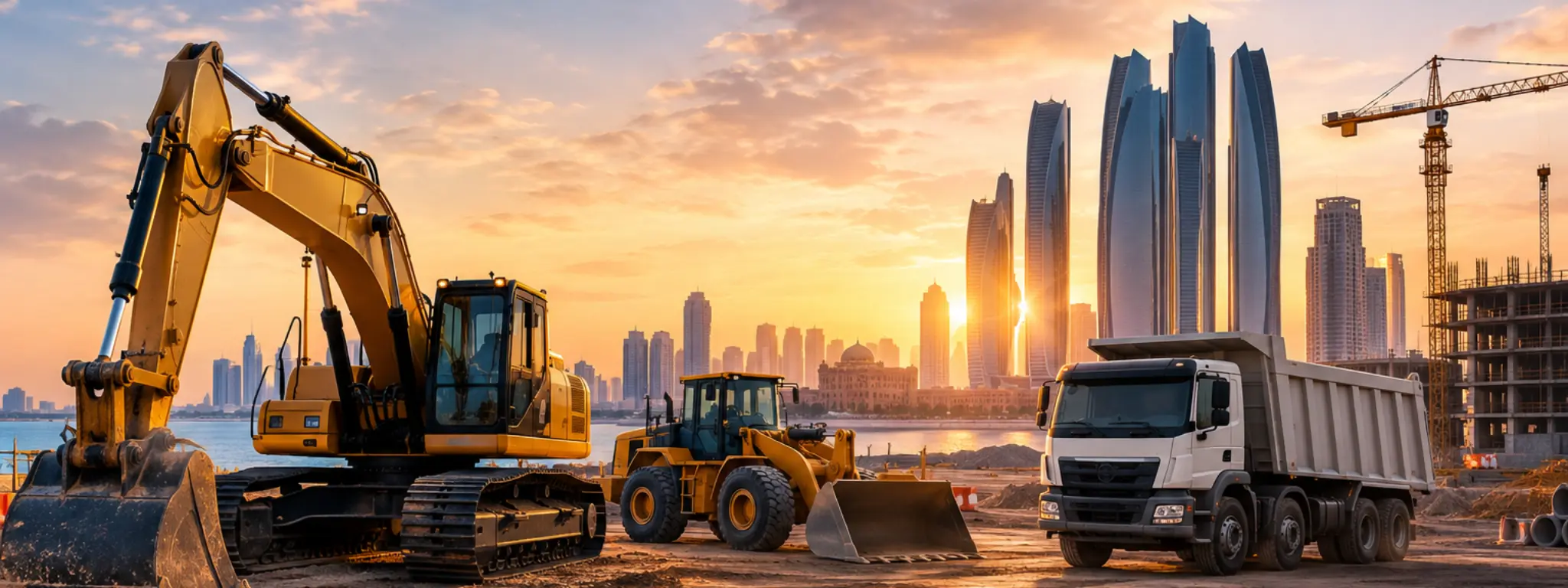
Selecting the right wheel loader size for construction and bulk material handling in the UAE directly impacts productivity, fuel consumption, and job site cycle times. The Caterpillar 950 wheel loader features an operating weight of 19 to 20 tonnes with a 3 cubic metre bucket, making it the standard choice for medium civil works, utility backfilling, and aggregate stockpiling. In contrast, the larger Caterpillar 966 offers an operating weight of 23 to 25 tonnes with a 4 cubic metre bucket, built for high-volume quarry work, primary earthmoving, and rapid loading of large multi-axle tipper trucks.

Matching machine capacity to site requirements prevents costly bottlenecks and excessive fuel expenditure. This guide compares performance metrics, bucket fill factors, site suitability, and regulatory standards for wheel loader rental in Abu Dhabi and the wider Western Region.

Understanding Wheel Loader Classes for UAE Construction Sites

Wheel loaders are rated primarily by operating weight, engine net horsepower, tipping load capacity, and bucket size. On job sites across Abu Dhabi, from Mussafah Industrial Area to offshore port developments in Khalifa Port, medium and heavy wheel loaders do most of the material handling.

Selecting between a 20-tonne class machine like the CAT 950 and a 25-tonne class machine like the CAT 966 involves evaluating the density of the material being moved:

  • Light Materials (1,000 to 1,400 kg/m³): Loose topsoil, dry sand, and agricultural products allow for larger bucket attachments without exceeding tipping limits.
  • Medium Density Materials (1,400 to 1,800 kg/m³): Crushed limestone, washed sand, sub-base gravel, and general excavated fill require standard earthmoving buckets to preserve machine balance.
  • High Density Materials (1,800+ kg/m³): Wet clay, blasted rock, and dense asphalt aggregates demand heavy-duty rock buckets and higher breakout forces to maintain cycle speeds.

In Abu Dhabi, loose desert sand and gatch layers present unique traction challenges. Heavy wheel loaders must deliver sufficient breakout force to penetrate undisturbed ground while maintaining stability on unpaved site access roads.

CAT 950 vs CAT 966 Specification Comparison

Evaluating technical specifications side-by-side helps site managers determine which payload capacity yields the lowest cost per tonne moved.

Feature / Specification CAT 950 (Medium Loader) CAT 966 (Heavy Duty Loader)
Operating Weight 19,000 – 20,500 kg 23,200 – 25,000 kg
Net Engine Power 168 – 186 kW (225 – 250 hp) 220 – 232 kW (295 – 311 hp)
Standard Bucket Capacity 3 m³ 4 m³
Full Turn Tipping Load 11,000 – 12,500 kg 14,500 – 16,000 kg
Breakout Force 150 – 165 kN 170 – 190 kN
Target Truck Match 10 to 15-tonne tippers 20 to 35-tonne heavy tippers
Average Fuel Consumption 14 – 18 litres/hour 22 – 28 litres/hour

The CAT 950 provides excellent mobility in confined urban work zones or busy equipment yards. The CAT 966 provides higher breakout force and structural weight, allowing operators to achieve full bucket loads in compacted materials without hydraulic strain.

Key Site Applications Across Abu Dhabi Infrastructure Projects

Both machine sizes serve distinct roles across civil construction, industrial operations, and primary infrastructure development across the emirate.

Civil Infrastructure and Roadway Development

For highway projects along the E11 and regional arterial road expansions, the CAT 950 is widely utilised for spreading base course aggregate, positioning backfill around drainage culverts, and feeding portable mixing plants. Its balanced turning radius makes it easy to manoeuvre within restricted lanes.

Aggregate Storage and Batching Plant Operations

In readymix concrete facilities and asphalt plants located in ICAD (Industrial City of Abu Dhabi) and Mussafah, wheel loaders run continuously. The CAT 966 is the preferred workhorse here, capable of keeping aggregate bins full during high-volume production runs. A CAT 966 can fill a 20 tonne tipper in three to four passes, drastically reducing haul truck cycle times.

Port Expansion and Coastal Earthworks

Marine reclamation projects require moving large volumes of wet dredged sand and heavy armour rocks. The added tipping load margin of the CAT 966 ensures stability when carrying dense loads over soft, uncompacted subgrades near water edges.

Earthmoving and Utility Support

On pipeline corridors in Habshan or desert infrastructure sites in Al Dhafra, wheel loaders perform multi-purpose roles. Contractors often pair loaders with smaller compaction tools, such as a plate compactor rental in Abu Dhabi, to prepare trench floors before pipe placement and backfilling operations.

Operational Efficiency: Fuel Economy and Pass-Matching

Optimising equipment productivity requires matching wheel loader bucket capacity to the haul trucks servicing the site. Mismatched machinery leads to extended idle times, wasted fuel, and site congestion.

  1. Calculate Truck Capacity: Determine the internal volume and maximum payload limit of your haulage fleet (e.g., 18 m³ tipper trucks).
  2. Determine Pass Counts: Aim for a 3-pass or 4-pass loading strategy. Loading a truck in fewer than 3 passes risks shock-loading the truck bed, while taking more than 5 passes creates traffic delays at the loading zone.
  3. Evaluate Cycle Times: A standard loader cycle (load, reverse, turn, dump, return) takes between 30 and 45 seconds under normal operating conditions. A CAT 966 moving 4 cubic metres per pass moves roughly 320 to 480 cubic metres of loose material per hour.
  4. Monitor Fuel Burn: Fuel represents a major operational expense in heavy civil earthmoving. While a CAT 950 burns approximately 14 to 18 litres per hour, a CAT 966 burns 22 to 28 litres per hour under heavy loading. If site layout or material supply delays prevent the 966 from operating at high capacity, renting a 950 offers lower hourly running costs.

Abu Dhabi summer temperatures frequently exceed 45°C. Rental wheel loaders operating in these extreme conditions must feature heavy-duty cooling packages, clean radiator cores, and high-capacity air filtration systems to prevent thermal derating and component wear.

Site Access Compliance and Safety Standards in Abu Dhabi

Operating heavy construction equipment in Abu Dhabi requires strict adherence to safety and environmental regulations governed by municipal authorities and project owners.

  • Third-Party Inspection Certificates: All rental wheel loaders entering commercial or government job sites must hold valid Third-Party Certificates issued by an accredited inspection body that the project specification or the site owner accepts. These certificates verify structural integrity, brake testing, and hydraulic safety valve operation.
  • Operator Qualifications: Operators must hold a valid UAE heavy equipment driving licence. On high-security sites, operators require specialised safety induction cards and medical fitness clearance.
  • Critical Infrastructure Gate Passes: Projects operating within oil and gas concessions or critical infrastructure zones require security clearances (CICPA passes) from the Critical Infrastructure and Coastal Protection Authority for both the machinery and the operator.
  • Environmental and Noise Limits: Equipment must meet the emission and noise limits set out in the project specification and by the authority with jurisdiction over the site, to limit environmental impact on active public works.
  • Tax Compliance: All machinery rental transactions in the UAE are subject to the standard 5% UAE VAT, with proper tax invoices specifying site delivery locations and operational terms.

Rental Structure: Short-Term vs Long-Term Equipment Hire

Contractors evaluate equipment procurement based on project timeline, capital availability, and site maintenance resources. Equipment hire is structured into standard operational formats:

  • Daily and Weekly Rental: Suitable for emergency backfill, short-term clearing, or temporary plant maintenance cover.
  • Monthly Dry Hire: The contractor supplies fuel and operator, while the rental supplier provides the fully serviced wheel loader and routine maintenance support.
  • Monthly Wet Hire: The rental supplier provides the machine, certified operator, routine maintenance, and mobilisations, simplifying payroll and operator management.

For major civil infrastructure packages running over six months, securing long-term equipment rental in Abu Dhabi locks in preferential monthly rates, removes balance-sheet depreciation risks, and covers replacement machinery during scheduled major servicing where the contract says so.

Partnering with Amirah Equipment Rental

Amirah Equipment Rental supplies inspected heavy machinery across Abu Dhabi, Mussafah, and the Western Region. Our rental fleet includes wheel loaders, earthmoving machinery and specialised plant.

Every wheel loader in our fleet undergoes rigorous pre-mobilisation checks to meet stringent site entry requirements. Beyond wheel loaders, we rent a wider range of plant, from earthmovers to quality-assured industrial equipment.

Our logistics team manages lowbed transport logistics directly to your job site, providing operational support, site-certified operators and field maintenance response.

Frequently Asked Questions

What is the main difference between a CAT 950 and CAT 966 wheel loader?

The primary differences are operating weight, engine power, and bucket size. The CAT 950 is a 19-to-20-tonne loader with a 3 m³ bucket, suited for medium civil earthmoving and utility work. The CAT 966 is a larger 23-to-25-tonne loader with a 4 m³ bucket, designed for high-capacity quarrying, batching plant feeding, and heavy truck loading.

Are wheel loader rentals in Abu Dhabi supplied with an operator?

Rental agreements can be configured as dry hire (machine only) or wet hire (machine with a fully certified, licensed operator). Wet hire ensures the operator holds valid UAE heavy machinery licences and site safety inductions.

What safety certification is required for wheel loaders on Abu Dhabi job sites?

Wheel loaders must possess a valid Third-Party Inspection Certificate issued by an accredited safety organisation in the UAE. Machinery working on ADNOC or industrial infrastructure sites also requires specific security gate passes and safety fittings, such as reverse alarms, flashing beacons, and fire extinguishers.

How does bucket size affect fuel consumption during material handling?

Using an oversized bucket in dense material can overload hydraulics, cause wheel spin, and increase hourly fuel burn without increasing tonnage output. Conversely, using a bucket that is too small requires extra passes to load trucks, burning unnecessary fuel over time. Pass-matching the loader bucket to material density and truck bed volume ensures optimal fuel economy.

Heavy equipment rental in Abu Dhabi enables commercial contractors to secure certified machinery without long-term capital commitment. Equipment hire across the emirate encompasses earthmoving plant, mobile lifting units, and site utilities fitted with Third-Party Inspection (TPI) certificates and Critical Infrastructure and Coastal Protection Authority (CICPA) clearances. Choosing flexible rental contracts turns fixed machinery overheads into project costs while maintaining compliance with local building authorities.

Commercial construction across Abu Dhabi demands strict operational efficiency. Commercial developers and infrastructure contractors have to work around the heat, rigorous safety audits and strict site deadlines. Securing the right fleet ensures project schedules remain on budget while adhering to regional construction standards.

Commercial Infrastructure Growth in Abu Dhabi for 2026

Abu Dhabi continues to expand its industrial and commercial footprint across strategic hubs such as Mussafah, Khalifa Economic Zones Abu Dhabi (KEZAD), Yas Island, and Al Dhafra. Major land development, civil infrastructure, and commercial builds require earthmoving, site clearance, and structural assembly plant capable of heavy output in hot climate conditions.

Municipal oversight in Abu Dhabi sits with the Department of Municipalities and Transport, which sets the operational standards for mechanical plant deployed on public and private projects. Contractors must ensure every machine brought to site meets current emission controls, noise restrictions, and safety verification guidelines before work commences.

Key Machinery Categories for Commercial Projects

Commercial sites rely on a mix of heavy earthmoving machinery, compaction equipment, and supporting site power units. Selecting the appropriate machine capacity prevents project delays and excess fuel consumption.

Earthmoving and Excavation Machinery

Heavy excavators ranging from 20 to 40 tonnes form the foundation of site preparation. Fitted with buckets, hydraulic breakers, or rippers, excavators handle deep trenching, foundation digging, and rock breaking in hard substrate environments. Wheel loaders complement excavators by moving bulk aggregates, backfilling trenches, and loading material trucks efficiently.

Site Lighting

Continuous work requires reliable site lighting. Mobile lighting towers allow extended night shifts, and lighting tower rental in Abu Dhabi lets main contractors scale coverage to the site without maintaining idle machinery.

Equipment Type Typical Capacity Range Key Commercial Applications
Hydraulic Excavators 20T to 40T Bulk earthworks, deep foundation trenching, rock breaking
Wheel Loaders 3 m³ to 4 m³ bucket Material rehandling, site clearing, aggregate loading
Motor Graders 12ft to 14ft blade Road grading, sub-base levelling, site finishing
Mobile Lighting Towers LED or metal halide, 1 to 4 lights, 5 to 15+ m mast Night operations and site security lighting

Compliance, CICPA Passes, and Safety Standards

Deploying machinery in sensitive industrial zones, oilfields, and coastal development areas requires strict regulatory compliance. Commercial contractors cannot afford site entry delays caused by non-compliant documentation.

  1. Third-Party Inspection (TPI) Certificates: All mechanical plant must hold valid TPI certification issued by an accredited inspection body that the project specification or the site owner accepts. Certificates confirm structural integrity, hydraulic safety, and emergency stop functionality.
  2. CICPA Security Approvals: Projects located near ports, energy installations, or restricted zones require CICPA driver and equipment security clearance passes.
  3. Operator Certification: Heavy machinery operators must carry valid UAE heavy equipment driving licences alongside the safety training credentials the site owner requires.
  4. ADNOC Offshore & Onshore Onboarding: Oil and gas commercial sub-contracts frequently mandate specific spark arrestors, external emergency cut-offs, and daily maintenance logs.

Working with suppliers offering quality-assured industrial equipment ensures machines arrive with full maintenance logs and current inspection tags ready for site entry.

Financial Comparison: Rental vs. Direct Capital Expenditure

Contractors continuously balance machinery acquisition costs against working capital constraints. Purchasing heavy equipment involves substantial initial capital outlay, bank interest fees, storage costs, and ongoing maintenance salaries. Conversely, hiring equipment transforms fixed capital costs into variable operational costs.

Buying: initial capital outlay, then depreciation, routine maintenance and the cost of idle time.

Renting: a monthly operational fee that stays a fixed project expense, with replacement machinery available and no depreciation to carry.

Equipment rental is an operating cost rather than a capital purchase, so how it is treated for corporate tax is a question for your tax adviser. Renting improves cash flow predictability and allows companies to tender for larger commercial contracts without straining line-of-credit limits.

Arranging a structured long-term equipment rental in Abu Dhabi allows project managers to fix machinery costs over 6 to 24 month timelines, eliminating unexpected repair invoices.

Key Terms in Commercial Machinery Rental Contracts

Before executing a commercial machinery agreement in Abu Dhabi, commercial teams must review specific lease parameters:

  • Working Hour Limits: Standard monthly rental agreements typically cover 240 operating hours per month (10 hours per day for 24 working days). Overtime hours are calculated at pro-rata hourly rates.
  • Dry Hire vs. Wet Hire: Dry hire includes the machinery alone, leaving fuel and operator management to the hirer. Wet hire includes certified operators and routine field servicing, shifting operational risk to the hire company.
  • Repair Response SLAs: Service level agreements must specify site breakdown response windows (agreed with the supplier before the hire starts) to minimise site downtime.
  • Mobilisation Charges: Transport fees cover delivery from the supplier yard to the jobsite and return journey charges upon off-hire notice.

Why Contractors Choose Amirah Equipment Rental

Amirah Equipment Rental provides reliable heavy plant solutions across Abu Dhabi, Mussafah, and the wider UAE. Amirah supplies excavators, loaders, compaction plant and site utilities to commercial contractors across the emirate.

Machines are inspected before delivery and sent with their current TPI paperwork. Whether you require single-day hire for site clearing or dedicated fleet machinery for multi-year civil works, Amirah offers flexible rental terms with field service support.

Frequently Asked Questions (FAQ)

What documentation is required to rent heavy equipment in Abu Dhabi?

Commercial hirers must provide a valid UAE Trade Licence, VAT Registration Certificate, signed rental agreement, and purchase order. Site access may also require valid operator UAE driving licences, Third-Party Inspection (TPI) cards, and security passes such as CICPA clearance.

How are rental equipment transport and mobilisation costs calculated?

Mobilisation and demobilisation fees are billed based on distance from the supplier yard in areas like Mussafah or ICAD to the project location. Flatbed or low-bed trailer transport costs are normally itemised separately from daily or monthly equipment rental rates.

Are operators included in heavy equipment rental agreements?

Equipment hire can be arranged on either a dry-hire basis (machinery only) or wet-hire basis (machinery with a certified operator and fuel management). Most large infrastructure projects in Abu Dhabi mandate certified, experienced operators.

How does equipment rental affect UAE VAT calculation?

Heavy equipment rental services are subject to standard 5% UAE VAT administered by the Federal Tax Authority (FTA). Registered commercial contractors can reclaim input VAT on tax invoices issued by compliant equipment rental companies.

Much of the construction and infrastructure work going on across Abu Dhabi depends on mobile cranes. On those sites, choosing the correct mobile crane capacity is not a technical detail. It decides whether the lift is safe, how long it takes and what it costs. This guide covers mobile cranes from 25 tonnes up to 100 tonnes, providing essential insights for informed rental choices in the UAE capital.

Choosing the right mobile crane capacity in Abu Dhabi, anywhere from 25 up to 100 tonnes, involves carefully matching the specific lifting requirements of a project, primarily the weight of the load, the required operating radius, and the lift height, against a crane’s detailed load chart. This ensures the crane can perform the lift safely and efficiently, without exceeding its structural limits or compromising site operations. Cranes in the 25 to 50 tonne range cover most everyday lifts, from setting precast concrete elements and steel structures to installing HVAC units and handling general construction materials, while the 70, 80 and 100 tonne machines take on the larger and longer-reach lifts that the smaller cranes cannot handle safely.

Demystifying Mobile Crane Capacity: What the Numbers Mean

When a mobile crane is rated, for example, as a ’50-tonne crane’, this figure represents its *maximum lifting capacity* under ideal conditions, typically at a minimal radius and with specific counterweight and boom configurations. This is often referred to as its gross capacity. In practical applications on an Abu Dhabi construction site, the *actual net lifting capacity* will always be lower due to various factors. These include the operating radius (the horizontal distance from the crane’s centre of rotation to the centre of the load), the boom length, the use of jibs, the weight of the rigging gear, and environmental conditions like wind speed.

Understanding a crane’s load chart is paramount. This chart, provided by the manufacturer, details the crane’s safe lifting capabilities across different boom lengths, radii, and configurations. It is the definitive guide for any lift plan.

Types of Mobile Cranes for Abu Dhabi Projects (25-100 Tonne)

Across the 25 to 100 tonne range, several types of mobile cranes are commonly deployed across Abu Dhabi, each offering distinct advantages based on site conditions and operational needs.

  • All-Terrain Cranes: These highly versatile machines are road-legal and can travel at highway speeds between sites, making them ideal for projects requiring frequent relocation across Abu Dhabi’s diverse urban and desert landscapes. Once on site, their multi-axle steering and heavy-duty suspension let them cross rough ground. They offer excellent lifting capabilities and reach across the full 25 to 100 tonne range, and the larger all-terrain models are the usual choice for the heaviest lifts at the top of that range.
  • Rough-Terrain Cranes: Designed specifically for off-road conditions, rough-terrain cranes excel on undeveloped construction sites, oil and gas fields, and infrastructure projects where stable ground is scarce. They have a heavy chassis, large tyres and four-wheel drive and steer. While not as fast on public roads, their compact footprint and strong lifting performance make them well suited to challenging, confined sites within the UAE.
  • Truck-Mounted Cranes (Hydraulic Truck Cranes): These cranes are mounted on a commercial truck chassis, offering excellent mobility and quick setup times. They are well-suited for general construction, utility work, and urban projects where rapid deployment and road travel are essential. Most truck-mounted models sit in the lower and middle capacities, providing a cost-effective solution for straightforward lifts, while heavier lifts are normally handled by all-terrain cranes. For specific smaller lifting needs, you might also consider a boom truck with a Hiab crane.

The Top of the Range: 70, 80 and 100 Tonne Cranes

Once a lift moves beyond what a 50 tonne machine can take, or a lighter load has to be placed a long way from the crane, the job calls for one of the larger cranes. Amirah Equipment Rental rents 25, 50, 70, 80 and 100 tonne mobile cranes from its yard in Mussafah.

Typical heavy lifts include:

  • Tower crane erection and dismantling: lifting jib sections, counter-jibs and ballast blocks at height.
  • Industrial and plant installations: heavy vessels, transformers, generators and process equipment on oil, gas and utility sites.
  • Large precast and steel elements: bridge beams, long-span steel trusses and heavy precast units, often at long radius.
  • Long-reach lifts: moderate loads placed far from the crane, where a smaller crane’s capacity drops too far at radius.

Heavy cranes need more planning than mid-range units:

  • Counterweight transport: larger cranes often travel with their counterweight carried separately on additional trucks, so allow for extra vehicles and assembly time on site.
  • Road movement permits: moving an oversized crane on public roads can require permits and escort arrangements, which adds lead time.
  • Ground bearing pressure: outrigger loads rise sharply with capacity, so a ground assessment and engineered crane mats are usually part of the lift plan.
  • Set-up space: heavy cranes need a larger footprint for outriggers, counterweight and boom assembly.
  • Booking lead time: heavy cranes are in higher demand and take longer to mobilise, so book them early.

Critical Factors for Selecting Your Crane’s Capacity

Choosing the right crane capacity is a meticulous process that requires a thorough understanding of your project’s specific demands. Here are the key factors to evaluate:

1. Weight of the Load

This is the most fundamental factor. Always determine the *gross weight* of the load, which includes not only the item itself but also all rigging gear (slings, shackles, spreader bars, hooks). It is always safer to overestimate slightly than to underestimate. For a 50-tonne crane, for example, if your heaviest lift is 40 tonnes, you might initially think it’s sufficient, but the next factors will determine if it truly is.

2. Operating Radius

The operating radius is the horizontal distance from the crane’s centre of rotation to the centre of the load. As the radius increases, the crane’s lifting capacity drops sharply, because the load acts on a longer lever arm. A crane that can lift 50 tonnes at a 3-metre radius might only be able to lift 10 tonnes at a 20-metre radius. Always calculate the maximum required radius for your furthest lift point.

3. Lift Height

How high does the load need to be lifted? This determines the necessary boom length. Extending the boom or using a jib also reduces the crane’s capacity. Ensure the chosen crane has sufficient main boom and jib length to reach the required height while maintaining adequate capacity for the load at that height and radius.

4. Site Conditions and Accessibility

Abu Dhabi construction sites vary greatly. Consider the following:

  • Ground Stability: Is the ground firm enough to support the crane’s weight and the load? Soft ground requires extensive matting or larger outrigger pads, which can influence crane choice.
  • Space Constraints: Is there enough room for the crane to set up, extend its outriggers fully, swing its boom, and manoeuvre safely? Tight spaces might necessitate a more compact rough-terrain crane or a crane with a smaller footprint.
  • Obstructions: Are there overhead power lines, existing structures, trees, or underground utilities that could impede the lift or require specific crane positioning?

5. Wind Speed and Environmental Factors

The UAE experiences varying wind conditions, especially during certain seasons. High winds can significantly impact crane stability and safe lifting operations. Crane manufacturers provide guidelines for maximum permissible wind speeds during operation. Always factor this into your lift planning and consider a crane with a higher capacity than strictly necessary for static weight to provide a safety margin against wind forces.

6. Lift Plan and Safety Margins

A detailed lift plan is not optional; it is a regulatory requirement and a safety imperative in Abu Dhabi. It should outline every aspect of the lift, including crane selection, rigging, personnel, and emergency procedures. Always select a crane with a comfortable safety margin above your calculated maximum load and operating conditions. Overloading a crane is extremely dangerous and illegal.

The Strategic Advantage of Renting Mobile Cranes in Abu Dhabi

For most contractors and businesses in Abu Dhabi, renting mobile cranes, particularly for specific projects or varying needs, offers significant advantages over outright purchase. The capital investment for a 25 to 100 tonne mobile crane is substantial, often running into millions of dirhams, not to mention ongoing costs.

  • Cost Efficiency: Renting eliminates the need for large upfront capital expenditure, ongoing maintenance, storage facilities, and depreciation. You only pay for the equipment when you need it. To learn more about the financial benefits, read our guide to renting versus buying equipment in the UAE.
  • Access to Modern Equipment: Rental companies like Amirah Equipment Rental regularly update their fleets, providing access to the latest, most efficient, and technologically advanced cranes that meet current safety and environmental standards.
  • Flexibility: Projects evolve. Renting allows you to scale your equipment needs up or down as required, choosing different crane capacities for different phases of a project without being tied to a single asset.
  • Maintenance and Support: Reputable rental providers handle all maintenance, repairs, and inspections, ensuring the equipment is always in top working condition. This reduces your operational burden and ensures compliance.

Regulations and Safety in Abu Dhabi

Operating heavy machinery like mobile cranes in Abu Dhabi is subject to strict regulations designed to ensure safety on construction sites and public areas. Key considerations include:

  • Permits and Approvals: Depending on the project location and the crane’s movement or operation on public roads, permits from the Department of Municipalities and Transport (DMT) may be required. These often involve submitting detailed lift plans, traffic management plans, and site assessments.
  • Operator Certification: All crane operators must hold valid certifications and licences issued by relevant UAE authorities, demonstrating their competence and adherence to safety protocols.
  • Site-Specific Safety Plans: Each site must have a comprehensive safety plan, including risk assessments for crane operations, emergency procedures, and designated safety officers. The UAE’s official government portal provides comprehensive information on business regulations and safety standards, which can be found at u.ae.

Adhering to these regulations is crucial not only for safety but also to avoid penalties and project delays. A reliable rental partner can assist in ensuring compliance.

Hiring a Mobile Crane from Amirah

We rent 25, 50, 70, 80 and 100 tonne mobile cranes, owned and maintained by us and dispatched from our yard in Mussafah. For a lift near the top of that range, allow for counterweight transport and a ground assessment.

  • Operators: mobile cranes are supplied with a certified operator, and rigging and banksman support can be arranged with your lift plan.
  • Hire terms: daily, weekly and monthly.
  • Delivery: across Abu Dhabi from our Mussafah yard, and to Dubai and Sharjah, where mobilisation is planned further ahead.
  • Controlled sites: CICPA passes and gate documentation are prepared for ADNOC facilities, ports and other restricted zones.

Send us the machine, the site and the dates and we will confirm availability and price. Call +971 2 886 9999 or request a quote. We confirm the machine before it leaves the yard.

Frequently Asked Questions About Mobile Crane Rental in Abu Dhabi

What information do I need to provide to rent the correct mobile crane capacity?

To ensure accurate crane selection, you should provide the maximum weight of the load (including rigging), the maximum required lift height, the maximum operating radius, details about the site conditions (ground stability, access, space constraints), and the duration of the rental. Site drawings and lift plans are also very helpful.

Are the mobile crane operators included in the rental cost?

Typically, mobile crane rental in Abu Dhabi includes a certified and experienced operator, as operating these machines requires specialised skills and licensing. It’s essential to confirm this with your rental provider to ensure full compliance and safe operation.

How far in advance should I book a mobile crane in Abu Dhabi?

It’s advisable to book your mobile crane as far in advance as possible, especially for the 70, 80 and 100 tonne cranes, or during peak construction seasons in Abu Dhabi. Booking 1-2 weeks in advance is generally recommended to secure the specific crane you need and allow time for any necessary permits or site assessments, and heavy cranes may need more notice for road movement permits and counterweight transport.

What are the key safety considerations when operating a mobile crane on an Abu Dhabi site?

Key safety considerations include ensuring the crane is correctly set up on stable ground with outriggers fully extended, adhering strictly to the load chart, maintaining clear communication between the operator and signal person, implementing a comprehensive lift plan, and ensuring all personnel wear appropriate PPE. Regular inspections and adherence to UAE safety regulations are paramount.

What is the largest mobile crane you can supply in Abu Dhabi?

Amirah Equipment Rental rents 25, 50, 70, 80 and 100 tonne mobile cranes. For a lift near the top of that range, share the load weight, radius, lift height and site access details so the right crane, counterweight and ground preparation can be planned.

On an Abu Dhabi site, picking the right telehandler decides both how fast the work goes and whether it is safe. For projects requiring vertical reach and material handling, 12-metre telehandlers are the most compact option, typically lifting around 3,000 kg to 4,000 kg with a forward reach of about 8 to 9 metres, suited to low-rise work and tighter sites. 14-metre telehandlers typically offer lift capacities ranging from 3,500 kg to 4,000 kg with a maximum outreach of around 9-10 metres, making them ideal for mid-rise tasks and general site duties. In contrast, 17-metre telehandlers provide superior height and often higher lift capacities, typically 4,000 kg to 5,000 kg, with outreaches extending up to 12-13 metres, suited for multi-storey buildings and larger, more demanding sites.

What is a Telehandler and Why is It Essential in Abu Dhabi?

A telehandler, short for telescopic handler, is commonly used on construction sites across Abu Dhabi and the wider UAE. It combines the functions of a crane, a forklift, and a work platform, all in one machine. Equipped with a telescopic boom that can extend both upwards and forwards, telehandlers lift, move and place materials at height or across obstacles. From loading and unloading trucks to transporting pallets of blocks, steel, or sand, and even providing access for personnel with a work platform attachment, telehandlers do the work of several machines.

Given Abu Dhabi’s continuous development of high-rise buildings, extensive infrastructure projects, and industrial facilities, the demand for efficient material handling solutions is consistently high. Telehandlers offer the flexibility and reach needed to keep projects on schedule and within budget, reducing the need for multiple specialised machines.

Understanding Telehandler Reach, Lift Capacity, and Weight

When considering a telehandler rental in Abu Dhabi, three primary specifications dictate the machine’s suitability for your project: reach, lift capacity, and operating weight. Understanding these helps you match the equipment to the task, ensuring both safety and productivity.

  • Reach: This refers to the maximum horizontal and vertical distance the boom can extend. Vertical reach is critical for lifting materials to higher floors, while horizontal reach allows you to place items over obstacles or into tight spaces.
  • Lift Capacity: This is the maximum weight a telehandler can safely lift. It is important to note that a telehandler’s lift capacity decreases as the boom extends further horizontally (outreach) or vertically. Always refer to the load chart for precise capabilities at different boom angles and extensions.
  • Operating Weight: The total weight of the machine itself. This is important for transport logistics and for assessing ground bearing pressure on your site, especially on softer terrain.

Modern telehandlers are also equipped with advanced safety features, including load management systems, stability indicators, and anti-tipping mechanisms, all designed to prevent accidents and ensure compliance with UAE safety standards.

12m Telehandlers: Compact Reach for Low-Rise and Tight Sites

The 12-metre telehandler is the most compact of the three sizes. When the work sits on the lower floors or the site is tight, it delivers the reach you need without the footprint, weight and cost of a larger machine.

Key Specifications and Capabilities

A typical 12-metre class telehandler offers:

  • Maximum Lift Height: Approximately 12 to 12.5 metres
  • Maximum Lift Capacity: Approximately 3,000 kg to 4,000 kg (at minimum reach)
  • Maximum Forward Reach: Approximately 8 to 9 metres
  • Operating Weight: Approximately 9,000 kg to 11,000 kg

Ideal Applications for 12m Telehandlers in Abu Dhabi

  • Villas and Low-Rise Buildings: Lifting blocks, cement bags, rebar and timber to the first and second floors.
  • Tight Urban Plots: Working in confined compounds and narrow access routes where a larger machine cannot manoeuvre.
  • Fit-Out and Finishing Logistics: Moving palletised finishing materials from delivery trucks to the building.
  • Landscaping and Utility Work: Placing pipes, precast items and landscaping materials across uneven ground.
  • Yards and Industrial Sites: General loading, unloading and stacking where 14m of height is not needed.

Choosing a 12m telehandler when the job does not need extra height keeps ground bearing pressure and transport requirements lower, and usually costs less to hire.

14m Telehandlers: Versatility for Mid-Range Projects

The 14-metre telehandler is a popular choice for a wide array of construction and industrial applications in Abu Dhabi. Its balance of reach, lift capacity, and manoeuvrability makes it highly versatile for many common tasks.

Key Specifications and Capabilities

A typical 14-metre telehandler, such as a JCB 535-140 or a Manitou MT 1440, offers:

  • Maximum Lift Height: 13.8 to 14 metres
  • Maximum Lift Capacity: 3,500 kg to 4,000 kg (at minimum reach)
  • Maximum Forward Reach: 9 to 10 metres
  • Operating Weight: Approximately 10,000 kg to 12,000 kg

Ideal Applications for 14m Telehandlers in Abu Dhabi

  • Residential and Commercial Building Construction: Lifting pallets of bricks, blocks, cement bags, and timber to the third or fourth floor of a building.
  • Material Loading and Unloading: Efficiently moving materials from delivery trucks to storage areas or directly to the work zone.
  • Roofing and Scaffolding Support: Supplying materials to roofers or assisting with the erection and dismantling of scaffolding.
  • General Site Maintenance: Transporting tools, equipment, and waste around a construction site.
  • Warehouse and Logistics: Handling heavy loads in large storage facilities, although less common than dedicated forklifts due to their size.

Its relatively compact footprint compared to larger models allows for better manoeuvrability on crowded sites, making it a go-to machine for many Abu Dhabi contractors.

17m Telehandlers: Enhanced Reach for Demanding Projects

When your project demands greater height and outreach, the 17-metre telehandler steps in. These machines are designed for more substantial tasks, particularly on multi-storey developments common across Abu Dhabi.

Key Specifications and Capabilities

A typical 17-metre telehandler, such as a JCB 540-170 or a Manitou MT 1740, provides:

  • Maximum Lift Height: 16.7 to 17 metres
  • Maximum Lift Capacity: 4,000 kg to 5,000 kg (at minimum reach)
  • Maximum Forward Reach: 12 to 13 metres
  • Operating Weight: Approximately 12,000 kg to 14,000 kg

Ideal Applications for 17m Telehandlers in Abu Dhabi

  • High-Rise Construction: Lifting heavy materials like concrete panels, large glass panes, or structural steel to higher floors of multi-storey buildings.
  • Infrastructure Projects: Handling pipes, beams, and other large components for bridges, flyovers, or utility installations.
  • Façade Work: Positioning façade elements or providing access for workers carrying out exterior finishing at significant heights.
  • Oil and Gas Sector: On larger industrial sites, these telehandlers can be crucial for moving heavy components or supporting maintenance tasks, often requiring adherence to specific site safety protocols like those for ADNOC sites, which may require a CICPA pass.

The extended reach of a 17m telehandler significantly reduces the need for repositioning the machine, saving time and increasing overall site efficiency, especially on sprawling project sites.

12m vs 14m vs 17m Telehandlers at a Glance

  • 12m telehandler: Lift height about 12 to 12.5 m, capacity about 3,000 to 4,000 kg, forward reach about 8 to 9 m. Best for low-rise buildings, villas and tight sites.
  • 14m telehandler: Lift height 13.8 to 14 m, capacity 3,500 to 4,000 kg, forward reach 9 to 10 m. Best for mid-rise buildings and general site duties.
  • 17m telehandler: Lift height 16.7 to 17 m, capacity 4,000 to 5,000 kg, forward reach 12 to 13 m. Best for multi-storey buildings, façade work and larger sites.

Always confirm the exact figures against the load chart of the specific machine supplied, as capacity falls as the boom extends. You can see our available reach heights on the telescopic boom loader rental page.

Choosing the Right Telehandler for Your Abu Dhabi Project

Making the correct choice between a 12m, 14m and 17m telehandler, or any other size, involves careful consideration of several project-specific factors. Renting the right equipment is often more cost-effective than purchasing, as detailed in our guide to renting versus buying equipment in the UAE.

Key Considerations:

  1. Maximum Required Lift Height and Reach: Accurately measure the highest point materials need to reach and the furthest horizontal distance they must cover. Always add a safety margin.
  2. Weight of Materials: Determine the heaviest load you will need to lift. Remember that capacity decreases with increased reach.
  3. Site Conditions: Assess the terrain, available space for manoeuvrability, and ground stability. Larger machines require more operating room and stable ground.
  4. Operator Expertise: Ensure your operators are certified and experienced with the specific telehandler model. In the UAE, operator certification is mandatory. Confirm which authority certifies the class of machine you are hiring, and keep the certificate on site for inspection.
  5. Attachments: Consider what attachments you might need (forks, buckets, work platforms, winches) as these can influence the machine’s overall performance and suitability.
  6. Rental Duration: For short-term projects, rental is almost always the more economical choice. Our guide to construction equipment rental in the UAE provides further insights.

Safety and Regulations for Telehandler Operation in UAE

Operating heavy machinery in the UAE, especially in a bustling emirate like Abu Dhabi, is subject to stringent safety regulations to protect workers and the public. Compliance is not just good practice; it’s a legal requirement.

  • Operator Certification: All telehandler operators must hold valid certification from an accredited training provider in the UAE. This typically involves both theoretical knowledge and practical assessment.
  • Daily Inspections: Before each shift, a thorough pre-operational check of the telehandler is mandatory. This includes checking fluids, tyres, lights, brakes, and safety systems.
  • Load Charts: Operators must strictly adhere to the load chart provided by the manufacturer, which details safe lifting capacities at various boom extensions and angles.
  • Site-Specific Risk Assessment: A comprehensive risk assessment must be conducted for every site and specific lifting operation, identifying potential hazards and implementing control measures.
  • Working at Height Regulations: When using a telehandler with a work platform attachment, all relevant working at height regulations must be followed, including fall protection measures and rescue plans.
  • Third-Party Inspection: Regular third-party inspections and certifications of heavy equipment are often required by local authorities to ensure machines meet safety standards.

Our telehandlers are owned and maintained by us, serviced on schedule, and checked before they leave the yard.

Hiring a Telehandler from Amirah

We rent 12 m, 14 m and 17 m telehandlers, owned and maintained by us and dispatched from our yard in Mussafah. Forks, buckets, jibs and work platforms are available, and capacity falls as the boom extends, so send the reach you need with the weight.

  • Operators: a certified operator can be supplied with the machine, or your own qualified personnel can operate it.
  • Hire terms: daily, weekly and monthly.
  • Delivery: across Abu Dhabi from our Mussafah yard.
  • Controlled sites: CICPA passes and gate documentation are prepared for ADNOC facilities, ports and other restricted zones.

Send us the machine, the site and the dates and we will confirm availability and price. Call +971 2 886 9999 or request a quote. We confirm the machine before it leaves the yard.

Frequently Asked Questions About Telehandler Rental in Abu Dhabi

What is the average daily rental cost for a telehandler in Abu Dhabi?

The daily rental cost for a telehandler in Abu Dhabi depends on the machine’s size (12m, 14m or 17m), its lift capacity, how long you need it, whether an operator is included and delivery to your site. We quote per job rather than publish a rate card, so send the reach and capacity you need, the site location and your dates, and we will come back with a firm price for the actual hire. Longer hires are quoted on weekly and monthly terms, which bring the cost per day down.

Do I need a special licence to operate a telehandler in Abu Dhabi?

Yes, absolutely. To operate a telehandler legally and safely in Abu Dhabi and the wider UAE, you must possess a valid heavy equipment operator’s licence or certification issued by an accredited training authority. This ensures operators have the necessary skills and knowledge to handle the machinery responsibly and adhere to safety protocols.

What is the typical lead time for renting a telehandler in Abu Dhabi?

Lead times can vary depending on demand and the specific telehandler model you require. For common models like 12m, 14m or 17m telehandlers, Amirah Equipment Rental confirms the delivery date with the quote, and can mobilise quickly for urgent needs. However, for specialised equipment or during peak construction seasons, it’s advisable to book at least a few days in advance to ensure availability.

Can telehandlers be used for personnel lifting in Abu Dhabi?

Yes, telehandlers can be fitted with approved work platform (man basket) attachments for personnel lifting. However, strict safety regulations apply. The telehandler must be designed for this purpose, the work platform must be certified, and operators must be specifically trained for personnel lifting operations. All relevant fall protection and safety protocols must be rigorously followed, as per UAE health and safety guidelines. It is crucial to confirm with your rental provider that the telehandler and attachment are certified for personnel lifting.

Which telehandler sizes can I rent from Amirah Equipment Rental in Abu Dhabi?

Amirah Equipment Rental supplies 12m, 14m and 17m telehandlers. The 12m suits low-rise work and tight sites, the 14m covers most mid-rise and general site duties, and the 17m handles higher floors and longer outreach.

For construction, logistics, and industrial projects across Abu Dhabi, selecting the correct forklift capacity is crucial for operational efficiency and safety. Forklifts from 3 to 16 tonnes cover most material handling in the emirate, facilitating tasks from stacking pallets in warehouses to moving heavy components on large construction sites. Renting them keeps capital free and lets you match the truck to the job, allowing businesses to adapt quickly to project demands without the burden of ownership.

For the full fleet and availability, see forklift rental in Abu Dhabi.

Why Forklift Rental is Essential for Abu Dhabi Projects

Construction and industrial work in Abu Dhabi moves between sites and phases, so the equipment has to move with it. Renting forklifts provides numerous advantages over purchasing, particularly for projects with varying durations or specific lifting requirements. It eliminates the substantial upfront capital outlay, depreciation costs, and the ongoing expenses of maintenance, storage, and insurance. For businesses in the UAE, this approach preserves capital, improves cash flow, and allows for greater agility in resource allocation.

Consider a scenario where a contractor needs a 7-tonne forklift for a three-month project at Masdar City. Buying such a machine would tie up significant funds and require long-term commitment. Renting, however, allows them to acquire the precise equipment for the required period, returning it once the job is complete. That matters in a market where project scopes and timelines shift. To learn more about the financial benefits, read our guide to renting versus buying equipment in the UAE.

Understanding Forklift Capacities: 3 to 16 Tonne Range

The 3 to 16 tonne range covers a broad spectrum of material handling needs, from standard warehouse operations to heavy industrial lifting. Each capacity segment offers distinct advantages, making the right choice dependent on your specific project requirements.

3-5 Tonne Forklifts: The Workhorses of General Construction

Forklifts in the 3 to 5-tonne capacity are the most commonly rented machines in Abu Dhabi for general material handling. They are highly versatile and suitable for a wide array of applications. These machines excel in tasks such as:

  • Warehousing and Logistics: Moving palletised goods, stacking, and loading/unloading trucks.
  • Light Construction Sites: Transporting bricks, cement bags, scaffolding, and smaller pre-fabricated components.
  • Retail and Commercial Projects: Handling deliveries and moving display materials.
  • Manufacturing Facilities: Shifting raw materials and finished products within factories.

Their compact size and manoeuvrability suit tighter spaces, while still offering substantial lifting power. Most 3-5 tonne models are equipped with pneumatic tyres for both indoor and outdoor use on relatively even surfaces.

6-8 Tonne Forklifts: Balancing Power and Versatility

When your project demands more lifting power than a standard 5-tonne forklift but doesn’t require extreme heavy-duty capabilities, the 6 to 8-tonne range steps in. These machines handle medium to heavy lifting with a useful balance of strength and flexibility. Common applications include:

  • Medium-Scale Construction: Handling larger pre-cast concrete sections, steel beams, or heavy machinery parts.
  • Port and Freight Operations: Moving larger containers or crated goods within smaller port facilities or cargo yards.
  • Heavy Manufacturing: Relocating substantial components and machinery in industrial settings.
  • Oil and Gas Support: Handling pipes, valves, and equipment in non-hazardous zones, often requiring specific safety certifications.

These forklifts are built for tougher conditions and can often be fitted with various attachments to enhance their utility, such as specialised clamps or longer forks.

9-10 Tonne Forklifts: Heavy Lifting for Industrial and Large-Scale Sites

9 to 10-tonne forklifts are designed for demanding heavy lifting applications. These machines suit large-scale industrial projects, major construction sites, and heavy logistics operations where significant loads must be moved safely and efficiently. Their primary uses include:

  • Large Construction Projects: Lifting substantial structural elements, heavy machinery, and large volumes of materials on major infrastructure developments.
  • Pre-Cast Yards: Handling heavy concrete slabs, beams, and columns.
  • Shipyards and Ports: Moving large marine components, heavy cargo, and containers.
  • Heavy Industry: Managing large dies, moulds, and raw materials in steel mills, foundries, and heavy equipment manufacturing.

Operating these larger machines requires experienced and certified operators, and careful planning of the work area due to their size and weight. They typically come with powerful diesel engines, designed for continuous heavy-duty work.

11-16 Tonne Forklifts: Containers and the Heaviest Loads

At the top of the range, heavy forklifts from 11 up to 16 tonnes handle loads that are beyond a 10-tonne machine, without the set-up time of a crane. Amirah Equipment Rental supplies forklifts up to 16 tonnes for these heavy handling jobs. Typical uses include:

  • Container and Port Yards: Moving loaded containers, heavy crates and large cargo within yards and laydown areas.
  • Steel and Pipe Handling: Lifting long steel sections, coils and pipe bundles on industrial and oil and gas support sites.
  • Heavy Precast and Machinery: Relocating large precast elements, generators and heavy plant components.

Heavy forklifts are larger and heavier machines, so plan for firm, level ground that can take their axle loads, wide travel routes and turning space, and longer forks or attachments matched to the load. As with any heavy machine, they should be run by experienced, certified operators.

Key Factors When Choosing Your Forklift in Abu Dhabi

Selecting the right forklift involves more than just capacity. Consider these critical factors specific to your project in Abu Dhabi:

  • Lifting Capacity and Height: Clearly define the maximum weight you need to lift and the maximum height it needs to reach. Always factor in a safety margin.
  • Site Conditions: Is the work primarily indoors or outdoors? What is the terrain like, smooth concrete, rough unpaved ground, or a mix? This determines tyre type (pneumatic, solid, cushion) and ground clearance needed.
  • Fuel Type:
  • Diesel Forklifts: Powerful, excellent for outdoor, heavy-duty work. Commonly used on construction sites in Abu Dhabi because they cope with heavy duty cycles and diesel is easy to get.
  • Electric Forklifts: Ideal for indoor use, warehouses, and areas requiring low noise and zero emissions. Require charging infrastructure.
  • LPG Forklifts: A good compromise for indoor/outdoor use, offering lower emissions than diesel but still requiring ventilation.
  • Attachments: Do you need standard forks, or will you require specialised attachments like fork extensions, rotators, side shifters, or clamps for specific loads?
  • Operator Licensing and Safety: In the UAE, forklift operators must hold valid licences and undergo safety training. Ensure your chosen rental company provides well-maintained machines that comply with local safety standards. The Ministry of Human Resources & Emiratisation (MoHRE) sets out comprehensive occupational safety and health standards for workplaces across the UAE, which includes the safe operation of machinery. You can find more information on these standards on the MoHRE website.

Rental Agreements and UAE Regulations

When renting a forklift in Abu Dhabi, understanding the rental agreement and adhering to local regulations is paramount. Key considerations include:

  • Rental Duration and Terms: Clarify the rental period, extension options, and any early termination clauses. Daily, weekly, and monthly rates vary significantly.
  • Maintenance and Servicing: Most reputable rental companies, like Amirah Equipment Rental, include routine maintenance and breakdown support in their agreements. Understand your responsibilities regarding daily checks and minor upkeep.
  • Insurance: Ensure adequate insurance coverage for the equipment against damage, theft, and third-party liability. Clarify who is responsible for what.
  • UAE VAT (Value Added Tax): As per Federal Tax Authority (FTA) regulations, a 5% VAT applies to equipment rental services in the UAE. Ensure your rental quote clearly itemises VAT charges.
  • Site-Specific Requirements: For projects within ADNOC facilities or other critical infrastructure sites, specific passes like the CICPA Pass are often mandatory for personnel and equipment. Ensure your rental provider is familiar with these requirements. For details, refer to our guide to CICPA passes for ADNOC sites.

Hiring a Forklift from Amirah

We own and maintain our forklifts and dispatch them from our yard in Mussafah: 3, 3.5, 5, 7 and 10 tonne diesel machines, plus heavy forklifts up to 16 tonnes, and electric and rough-terrain models.

  • Operators: a certified operator can be supplied with the machine, or your own qualified personnel can operate it.
  • Hire terms: daily, weekly and monthly.
  • Delivery: across Abu Dhabi from our Mussafah yard, and to Dubai and Sharjah on a planned basis.
  • Controlled sites: CICPA passes and gate documentation are prepared for ADNOC facilities, ports and other restricted zones.

Send us the machine, the site and the dates and we will confirm availability and price. Call +971 2 886 9999 or request a quote. We confirm the machine before it leaves the yard.

What to Send Us for a Quote

Capacity needed and the heaviest load, the highest lift, whether the work is indoors or on rough ground, the site location and your dates. Send those and we will match the truck to the job.

Frequently Asked Questions About Forklift Rental in Abu Dhabi

What types of forklifts are available for rent in the 3-16 tonne range in Abu Dhabi?

In the 3-16 tonne range, you can typically rent a variety of counterbalanced forklifts powered by diesel, electric, or LPG. Diesel models are common for outdoor heavy-duty construction and industrial sites, while electric and LPG options are often chosen for indoor warehouse operations or areas requiring lower emissions.

Do I need a special licence to operate a rented forklift in the UAE?

Yes, in the UAE, all forklift operators must possess a valid operator certification for the class of forklift they are driving, and undergo specific safety training. Confirm which authority certifies the class of machine you are hiring, and keep the certificate on site for inspection. Rental companies will verify operator credentials to ensure compliance with local regulations.

What is typically included in a forklift rental agreement in Abu Dhabi?

A standard rental agreement usually includes the use of the forklift for a specified period, routine maintenance, and breakdown support. Fuel, operator wages, and insurance are generally separate, though some agreements may offer optional add-ons. Always clarify the inclusions and exclusions before signing.

How does VAT apply to forklift rental costs in the UAE?

As per Federal Tax Authority (FTA) regulations, a 5% Value Added Tax (VAT) is applied to all equipment rental services in the UAE, including forklift rentals. This tax will be added to the rental charges and must be paid to the rental company.

What is the largest forklift you can supply in Abu Dhabi?

Amirah Equipment Rental supplies forklifts up to 16 tonnes. For heavy loads, share the load weight and dimensions, lift height and ground conditions so the right machine and attachments can be matched to the job.

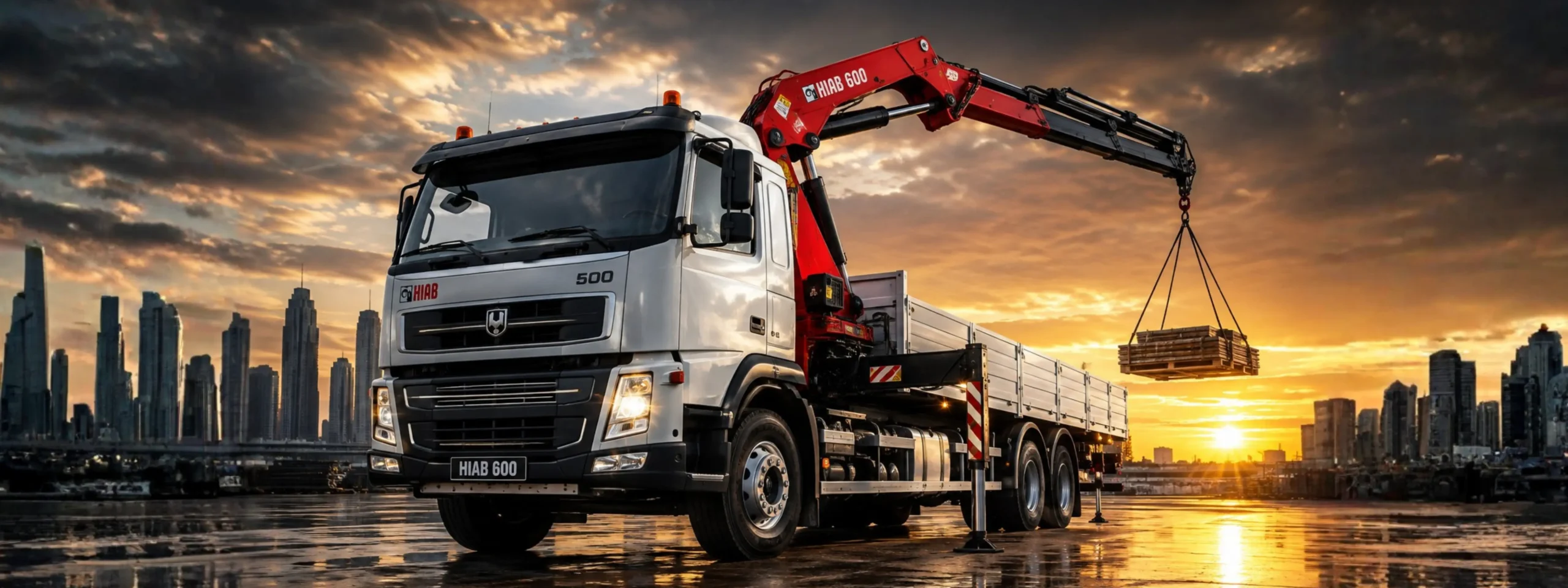
When it comes to efficiently handling heavy loads and transporting materials across diverse construction and industrial sites in Abu Dhabi, boom trucks, often referred to as Hiab cranes, do both jobs on one vehicle. These versatile machines combine the lifting capabilities of a crane with the transport functionality of a flatbed truck, offering a cost-effective and flexible solution for a wide array of projects, from infrastructure development to logistics and utility work.

What is a Boom Truck (Hiab Crane)?

A boom truck, or lorry loader, is a commercial truck chassis equipped with a hydraulic crane mounted behind the cab or at the rear of the vehicle. The ‘Hiab’ name is often used interchangeably with boom truck due to the brand’s pioneering role and widespread presence in the industry. Unlike traditional mobile cranes that are solely designed for lifting and require separate transport, boom trucks are self-sufficient: they can lift, load, and transport materials on their integrated flatbed, significantly streamlining operations.

These machines are essential for tasks requiring both lifting and transport, such as:

  • Material Delivery: Lifting and placing construction materials like steel beams, pre-cast concrete, or large pipes directly onto a site.
  • Equipment Relocation: Moving generators, compressors, or other heavy machinery within a project site or between different locations.
  • Utility Work: Assisting in the installation or maintenance of power poles, streetlights, and communication infrastructure.
  • Logistics: Loading and unloading cargo in warehouses or distribution centres.
  • Event Setup: Placing heavy structures or equipment for large-scale events.

Why Choose Boom Truck Rental in Abu Dhabi?

For businesses and contractors in Abu Dhabi, renting a boom truck offers significant advantages over outright purchase. Buying a new boom truck is a substantial capital commitment, and what it costs varies widely with capacity and features. Rental eliminates this upfront cost, along with ongoing expenses like maintenance, storage, and depreciation.

Here are key benefits of renting:

  • Cost Efficiency: Avoids large capital outlay, maintenance costs, insurance, and storage fees. Rental costs are typically project-specific, allowing better budget control. For a detailed comparison, see renting versus buying equipment in the UAE.
  • Flexibility: Access different boom truck sizes and capacities as project requirements change, ensuring you always have the right tool for the job without being tied to a single asset.
  • Reduced Downtime: Reputable rental companies like Amirah Equipment Rental maintain modern fleets, regularly serviced and inspected, minimising the risk of breakdowns and ensuring high operational reliability.
  • Access to Expertise: Many rentals come with certified operators who are familiar with Abu Dhabi site conditions and local safety standards.
  • Compliance & Regulations: Rental providers ensure their fleet and operators comply with UAE road transport regulations, safety standards, and specific site requirements, including those for ADNOC and other industrial zones.

Key Factors When Renting a Boom Truck in Abu Dhabi

Selecting the right boom truck for your project in Abu Dhabi requires careful consideration of several factors to ensure efficiency, safety, and compliance.

Lifting Capacity and Reach

The most crucial specifications are the boom truck’s lifting capacity (how much weight it can lift) and its reach (how far and high it can extend). These are typically expressed in tonne-metres, indicating the crane’s maximum lifting moment. For example, a 20 tonne-metre crane might lift 2 tonnes at a 10-metre radius, or 4 tonnes at a 5-metre radius.

  • Assess Load Weight: Accurately determine the heaviest items you need to lift and transport.
  • Consider Reach Requirements: Measure the maximum horizontal and vertical distance the crane needs to reach from its setup point.

Payload Capacity

Beyond lifting, the flatbed’s payload capacity is vital if you intend to transport materials. Ensure the truck can legally carry the combined weight of the lifted item and any other cargo on its bed, adhering to UAE road weight limits.

Site Accessibility and Terrain

Abu Dhabi sites run from dense urban plots to remote desert locations and industrial facilities, and each needs its own access plan.

  • Clearance: Check for overhead obstructions (power lines, bridges) and lateral obstructions (buildings, trees).
  • Ground Conditions: Ensure the ground is stable enough to support the boom truck’s weight, especially when the outriggers are deployed.
  • Manoeuvrability: Consider tight turns, narrow access roads, and general traffic conditions in areas like Mussafah, ICAD, or the city centre.

Operator Certification and Permits

Operating heavy machinery in the UAE is subject to strict regulations to ensure safety. All boom truck operators must hold valid heavy vehicle driving licences and crane operator certifications issued by relevant authorities. For projects on ADNOC sites, additional specific permits and operator passes, such as the CICPA Pass, are mandatory. You can learn more about these requirements in our guide to CICPA passes for ADNOC sites.

It’s also essential to verify any site-specific permits required by the Abu Dhabi Municipality or other relevant bodies for lifting operations, especially near public areas or major infrastructure. For workplace safety requirements in Abu Dhabi, the governing framework is the Abu Dhabi Occupational Safety and Health System Framework (OSHAD-SF), and site-specific guidance is published through the Tamm Abu Dhabi Government Portal.

Types of Boom Trucks and Their Applications

Boom trucks come in various configurations, each suited for different tasks.

Boom Truck Type Typical Lifting Capacity Common Applications in Abu Dhabi
Light-Duty 5–10 tonne-metre Small deliveries, urban logistics, minor installations, utility maintenance.
Medium-Duty 10–25 tonne-metre General construction, material handling for residential/commercial projects, equipment transport, signage installation.
Heavy-Duty 25–80+ tonne-metre Infrastructure projects, large-scale construction (e.g., bridges, industrial plants), heavy machinery relocation, specialised lifting tasks.

Safety Considerations for Boom Truck Operations in the UAE

Safety is paramount when operating any heavy equipment, especially boom trucks. Local and international safety standards are a regulatory requirement. In Abu Dhabi, companies must comply with the Abu Dhabi Occupational Safety and Health System Framework (OSHAD-SF) for workplace safety.

Key safety practices include:

  • Pre-Operational Checks: Daily inspections of the boom truck, including hydraulics, brakes, tyres, and safety systems.
  • Load Charts: Operators must strictly follow the manufacturer’s load charts to prevent overloading and ensure stability.
  • Outrigger Deployment: Proper setup and full extension of outriggers on stable ground are critical for preventing tip-overs.
  • Clearance & Spotters: Maintaining safe distances from power lines and other obstructions, often requiring a dedicated spotter.
  • Personal Protective Equipment (PPE): All personnel near the operation must wear appropriate PPE.
  • Regular Maintenance: Ensuring the boom truck is regularly serviced and certified by qualified technicians.

Hiring a Boom Truck from Amirah

We rent a 10 tonne Hiab truck with a 7 tonne crane, owned and maintained by us and dispatched from our yard in Mussafah. It lifts, loads and carries on one vehicle, so a delivery and a placement are a single hire.

  • Operators: a certified operator can be supplied with the machine, or your own qualified personnel can operate it.
  • Hire terms: daily, weekly and monthly.
  • Delivery: across Abu Dhabi from our Mussafah yard.
  • Controlled sites: CICPA passes and gate documentation are prepared for ADNOC facilities, ports and other restricted zones.

Send us the machine, the site and the dates and we will confirm availability and price. Call +971 2 886 9999 or request a quote. We confirm the machine before it leaves the yard.

Frequently Asked Questions (FAQ)

What is the typical rental duration for a boom truck in Abu Dhabi?

Rental durations can vary widely based on your project’s needs. Amirah Equipment Rental offers flexible options including daily, weekly, monthly, and long-term rentals. We recommend discussing your project timeline with our team to determine the most cost-effective and suitable rental period.

Do boom truck rentals from Amirah Equipment Rental include an operator?

Yes. For most boom truck hires we supply a certified operator. If your own personnel hold the heavy vehicle licence and the crane certification, the truck can be hired without one.

What information do I need to provide to rent the correct boom truck size?

To help us recommend the ideal boom truck, please provide details such as the maximum weight of the items to be lifted, the required lifting height and horizontal reach, the type of materials to be transported, the accessibility of your job site, and the duration of the rental. This information allows us to match you with the most suitable machine from our fleet.

Are there any specific permits required for operating a boom truck in Abu Dhabi?

Yes, specific permits may be required depending on the job site and nature of the work. Operators must have valid UAE heavy vehicle licences and crane certifications. Additionally, projects in industrial zones like ADNOC sites require specific passes (e.g., CICPA). We can advise you on the necessary permits and help ensure compliance with Abu Dhabi Municipality and other local regulations.

Ready to hire? See boom truck (Hiab) rental in Abu Dhabi for the spec, hire terms and delivery areas, or call +971 2 886 9999.

For businesses and contractors in the UAE construction sector, renting heavy equipment offers significant advantages, including cost efficiency, operational flexibility, and access to a modern, well-maintained fleet. This approach helps preserve capital, streamlines project management, and ensures compliance with local regulations, making it a preferred strategy for numerous projects across Abu Dhabi and the wider Emirates.

Understanding the UAE Construction Equipment Rental Market

The United Arab Emirates has a large and active construction market, particularly in Abu Dhabi, which continues to drive infrastructure and real estate projects. That demand carries through to heavy machinery, from excavators to forklifts, necessitating efficient equipment acquisition strategies. For many companies, outright purchase ties up substantial capital, introduces maintenance burdens, and risks equipment obsolescence.

Construction equipment rental in the UAE addresses these challenges by providing access to a diverse fleet without the long-term financial commitments. The market is characterised by competitive pricing, advanced machinery, and a strong emphasis on service and reliability, aligning with the stringent project requirements common in the region. Furthermore, businesses must consider the 5% Value Added Tax (VAT) regulated by the Federal Tax Authority (FTA) on rental services, which is a standard part of commercial transactions in the UAE. For more information on tax regulations, you can visit the official Federal Tax Authority (FTA) website.

Key Benefits of Construction Equipment Rental in the UAE

Opting for equipment rental over purchase presents several compelling benefits for businesses operating in the UAE, directly impacting their financial health and operational efficiency.

Cost Efficiency and Capital Preservation

One of the primary drivers for equipment rental is its significant cost advantage. Renting avoids the hefty upfront capital expenditure required to purchase heavy machinery, freeing up funds for other critical project investments or working capital. Beyond the initial cost, rental eliminates ongoing expenses such as:

  • Depreciation: Equipment value declines over time, a cost borne by the owner.
  • Maintenance and Repairs: Regular servicing, unexpected breakdowns, and parts replacement can be substantial.
  • Storage and Transportation: Secure storage facilities and logistics for moving equipment between sites are costly.
  • Insurance and Licensing: Annual insurance premiums and licensing fees add to ownership costs.

With rental, these costs sit with the rental provider, so the hire rate is predictable. To explore this further, read our guide to renting versus buying equipment in the UAE.

Flexibility and Access to Modern Fleet

Construction projects in the UAE often require different types of equipment for varying durations. Rental provides unparalleled flexibility:

  • Scalability: Easily scale your equipment fleet up or down based on project demands, without being stuck with underutilised assets.
  • Latest Technology: Access to a modern, well-maintained fleet featuring the latest advancements in efficiency, safety, and environmental compliance. This ensures optimal performance and adherence to evolving industry standards.
  • Project-Specific Needs: Acquire specialist machinery for unique tasks without committing to a long-term purchase, ensuring you always have the right tool for the job.

Reduced Operational Burdens

Rental companies like Amirah Equipment Rental handle many of the operational complexities associated with heavy machinery, allowing your team to focus on core construction tasks. This includes:

  • Maintenance and Servicing: Regular preventative maintenance and urgent repairs are managed by the rental provider’s expert technicians.
  • Compliance: Ensuring equipment meets all local safety standards, environmental regulations, and operational certifications.
  • Breakdown Support: Prompt technical support and replacement equipment in case of breakdowns, minimising costly project delays.

Types of Construction Equipment Available for Rent in the UAE

What construction equipment is most commonly rented in the UAE?

The most commonly rented construction equipment in the UAE is earthmoving machinery (excavators, wheel loaders and backhoe loaders), lifting and material handling equipment (forklifts, telehandlers and mobile cranes), road building equipment (motor graders and road rollers), compaction equipment, and heavy haulage trailers for moving machines between sites.

The range of construction equipment available for rent in the UAE is vast, catering to virtually every project requirement. Here are some of the most commonly rented categories:

  • Earthmoving Equipment: Essential for excavation, trenching, grading, and material handling.
  • Excavators: Ranging from mini excavators for confined spaces to large hydraulic excavators for major earthworks. For guidance on selecting the right size, see our article on choosing the right excavator size.
  • Wheel Loaders: Ideal for loading trucks, moving aggregates, and general site cleanup.
  • Backhoe Loaders: Versatile machines combining the functions of a loader and an excavator.
  • Lifting and Material Handling Equipment: Crucial for vertical and horizontal movement of materials.
  • Forklifts: Various types (diesel, electric, rough terrain) for lifting and transporting palletised goods.
  • Telehandlers (Boom Loaders): Multi-purpose machines with telescopic booms for lifting, reaching, and placing materials at height. Explore their use in our guide to boom loader rental in Abu Dhabi.
  • Cranes: Mobile cranes for heavy lifting operations.
  • Road Building Equipment: Specialised machinery for infrastructure development.
  • Motor Graders: For creating flat surfaces during road construction and site preparation.
  • Road Rollers (Compactors): Used for compacting soil, asphalt, and other materials.
  • Compaction Equipment: Beyond road rollers, this includes plate compactors and rammers for smaller-scale soil compaction.
  • Heavy Haulage: Low-bed trailers and flatbed trailers for transporting heavy machinery to and from project sites.

Factors Influencing Construction Equipment Rental Costs in the UAE

Understanding the elements that determine rental costs is crucial for effective budget planning. Key factors include:

  • Equipment Type and Size: Larger, more specialised, or higher-capacity machinery will naturally command higher rental rates.
  • Rental Duration: Rates are typically structured daily, weekly, or monthly. Longer rental periods often come with discounted daily rates.
  • Operating Hours: Exceeding standard operating hours (e.g., 8-10 hours per day) may incur additional charges.
  • Delivery and Collection Fees: The cost of transporting equipment to and from your site, especially for remote locations or within specific zones like Abu Dhabi, can vary.
  • Operator Inclusion (Wet vs. Dry Rental):
  • Dry Rental: You rent the equipment only and provide your own certified operator.
  • Wet Rental: The rental includes both the machinery and a skilled operator, often at a higher rate but offering convenience and expertise.
  • Fuel: Typically, fuel is not included in the rental price and is the responsibility of the renter.
  • Insurance: While rental companies usually have basic insurance, it’s vital to clarify coverage. You might need to arrange supplementary project-specific insurance.
  • Project-Specific Requirements: Certain projects, especially those on government or ADNOC sites, require special permits like a CICPA pass, which can affect logistics and associated costs. Our guide to CICPA passes for ADNOC sites offers detailed insights.

How to Choose the Right Equipment Rental Partner in the UAE

Selecting a reliable equipment rental partner is as important as choosing the equipment itself. Consider these critical aspects:

  1. Reputation and Experience: Look for companies with a proven track record, positive client testimonials, and extensive experience in the UAE market, particularly in your project’s region like Abu Dhabi.
  2. Fleet Size and Diversity: A broad selection of modern, well-maintained equipment ensures they can meet diverse project demands and offer suitable alternatives if needed.
  3. Maintenance Standards and Reliability: Inquire about their maintenance protocols. Reliable equipment minimises downtime and keeps your project on schedule.
  4. Customer Service and Support: Evaluate their responsiveness, technical support, and availability for emergency breakdowns. Ask for their support hours and breakdown response in writing.
  5. Transparent Pricing and Contract Terms: Ensure all costs, including delivery, fuel, insurance, and potential overtime charges, are clearly outlined in the rental agreement. Understand the terms regarding damage, liability, and early termination.
  6. Safety Compliance: Verify that their equipment and operations adhere to all local and international safety standards and regulations.
  7. Geographic Coverage: Confirm they can efficiently serve your project locations across the UAE, with a strong presence in key areas like Abu Dhabi.

Hiring Construction Equipment from Amirah

We own and maintain the fleet: excavators from 3 tonnes to the Komatsu PC400 class, Caterpillar 950 and 966 wheel loaders, motor graders, forklifts from 3 to 16 tonnes, telehandlers, mobile cranes from 25 to 100 tonnes, access platforms, rollers, tippers and site lighting.

  • Operators: a certified operator can be supplied with the machine, or your own qualified personnel can operate it.
  • Hire terms: daily, weekly and monthly.
  • Delivery: across Abu Dhabi from our Mussafah yard, and to Dubai and Sharjah on a planned basis.
  • Controlled sites: CICPA passes and gate documentation are prepared for ADNOC facilities, ports and other restricted zones.

Send us the machine, the site and the dates and we will confirm availability and price. Call +971 2 886 9999 or request a quote. We confirm the machine before it leaves the yard.

Frequently Asked Questions (FAQ)

What is the typical duration for construction equipment rental in the UAE?

Rental durations in the UAE are highly flexible, ranging from daily to weekly, monthly, or even long-term contracts spanning several months or years. The best duration depends on your project timeline and budget, with longer terms often offering more favourable daily rates.

Is an operator included with construction equipment rental in the UAE?

This depends on whether you opt for a ‘dry rental’ (equipment only) or a ‘wet rental’ (equipment with a certified operator). Many companies, including Amirah Equipment Rental, offer both options to cater to varying client needs. It’s crucial to specify your preference when requesting a quote.

What are the typical payment terms for equipment rental in the UAE?

Payment terms usually involve an upfront deposit, followed by regular payments (e.g., monthly) as per the contract. Invoices will include the 5% UAE VAT. Always clarify the payment schedule, accepted methods, and any late payment penalties with your rental provider beforehand.

Do I need special permits for equipment operation in the UAE?

Yes, depending on the type of equipment, its size, and the project location (e.g., public roads, restricted zones like ADNOC sites), various permits may be required. Your rental partner can often advise on or assist with obtaining necessary permits, such as a CICPA pass for specific industrial areas. Ensuring compliance is the responsibility of the project contractor.

Where can I rent construction equipment in Abu Dhabi?

Amirah Equipment Rental supplies construction equipment from its Mussafah yard in Abu Dhabi, including excavators, forklifts, boom lifts, scissor lifts and mobile cranes, on daily, weekly and monthly hire with UAE-wide delivery. Call +971 2 886 9999 for a quote.

A boom loader, commonly known as a telehandler, is used for lifting and moving materials on construction sites across Abu Dhabi. With its telescopic boom, it combines the functions of a forklift, a crane, and a work platform, making it useful across projects ranging from high-rise building construction to industrial logistics within the emirate’s rapidly developing infrastructure. Amirah Equipment Rental owns and maintains its boom loaders, which are dispatched from our yard in Mussafah. Understanding the capabilities and rental considerations for these machines is crucial for efficient and safe operations.

What is a Boom Loader (Telehandler)?

At its core, a boom loader, or telehandler (short for telescopic handler), is a machine designed for lifting, moving, and placing materials at height or across obstacles. It features a telescopic boom that can extend both upwards and forwards, offering far greater versatility than a standard forklift. Its ability to attach various implements, such as forks, buckets, jibs, and work platforms, allows it to perform a multitude of tasks, significantly enhancing productivity on site. On Abu Dhabi sites, where the work often involves tight spaces, several floor levels and different materials in a day, the telehandler does the work of three machines.

Key Features of a Boom Loader:

  • Telescopic Boom: The defining feature, allowing for extended reach and height.
  • Versatile Attachments: Easily swap between forks for pallets, buckets for loose materials, jibs for suspended loads, and man baskets for work at height.
  • Rough Terrain Capability: Most models are equipped with four-wheel drive and heavy-duty tyres, making them suitable for challenging construction site conditions.
  • Stability: Designed with outriggers (on some models) and counterweights to ensure safe operation when lifting heavy loads at height.

Why Rent a Boom Loader for Your Abu Dhabi Project?

For contractors and businesses in Abu Dhabi, renting a boom loader often makes more financial and operational sense than purchasing one. The benefits are clear:
  1. Cost Efficiency: Avoid the significant upfront capital investment, depreciation, maintenance costs, and storage expenses associated with ownership. Renting allows you to allocate your budget more effectively to core project activities. For a deeper dive into the financial implications, read our guide on equipment rental vs. buying in the UAE.
  2. Project Specificity: Different projects demand different machine specifications. Renting gives you the flexibility to choose the exact boom loader size and capacity required for each specific task, avoiding the inefficiency of using an oversized or undersized owned machine.
  3. Reduced Maintenance Burden: Rental companies like Amirah Equipment Rental handle all routine maintenance, repairs, and inspections. This means less downtime for your project and no unexpected repair bills.
  4. Access to Modern Fleet: Rental fleets are regularly updated with the latest models, ensuring you have access to advanced technology, better fuel efficiency, and enhanced safety features without continuous investment.
  5. Storage and Logistics: Eliminate the need for secure storage facilities and the logistical challenge of transporting heavy equipment when not in use.

Key Applications: Where Boom Loaders Excel in Abu Dhabi

Abu Dhabi’s construction and industrial sectors cover projects ranging from new residential communities to massive infrastructure upgrades and oil and gas developments. Boom loaders are used across these applications:
  • High-Rise Construction: Lifting pallets of bricks, cement bags, rebar, and scaffolding materials to various floors.
  • Warehouse and Logistics: Efficiently moving heavy loads in large storage facilities, stacking materials, and loading/unloading trucks.
  • Façade Work: Positioning glass panels, cladding, and other exterior finishing materials at height using specialised attachments.
  • Infrastructure Projects: Assisting in bridge construction, roadworks, and utility installations by moving pipes, cables, and structural components.
  • Oil & Gas Facilities: Essential for maintenance, construction, and material handling within industrial plants and offshore supply bases, often requiring specific safety certifications and compliance, such as the CICPA Pass for ADNOC sites.
  • Events and Exhibitions: Setting up stages, lighting rigs, and temporary structures in large venues.

Choosing the Right Boom Loader Size

Consider these factors:

  • Maximum Reach and Height: Measure the highest point and furthest horizontal reach your materials need to go.
  • Load Weight: Determine the heaviest load you will need to lift. Always factor in a safety margin.
  • Site Conditions: Assess terrain, available space, and ground stability. Rough terrain models are essential for unpaved Abu Dhabi construction sites.
  • Attachments: Confirm what attachments are necessary for your tasks (e.g., standard forks, side-shift carriages, rotating forks, jib cranes, personnel work platforms, or buckets).

What to Check Before You Hire a Boom Loader in Abu Dhabi

Renting heavy equipment in Abu Dhabi comes with specific considerations to ensure compliance and smooth operations.
  1. Operator Certification and Licensing: All boom loader operators in the UAE must possess a valid heavy equipment operator licence. Confirm which authority certifies the class of machine you are hiring, and keep the certificate on site for inspection. Ensure your operators are fully qualified and experienced for the specific machine you are renting.
  2. Site Access and Safety: For projects within sensitive areas like ADNOC sites or other industrial zones, strict safety protocols and specific passes (e.g., CICPA pass) are mandatory. Your rental provider should be knowledgeable about these requirements.
  3. Rental Agreements and Insurance: Carefully review the rental contract, understanding terms regarding rental duration, payment schedules, responsibilities for fuel, minor repairs, and damage. Ensure adequate insurance coverage is in place for the equipment and potential liabilities.
  4. Delivery and Logistics: Plan for timely delivery and pickup of the boom loader to your Abu Dhabi site. Discuss transportation costs and logistics with your rental partner.
  5. Pre-Rental Inspection: Before accepting delivery, conduct a thorough inspection of the machine with the rental company representative. Document any existing damage or issues to avoid disputes later.
For official guidelines on construction safety and permits in Abu Dhabi, it’s advisable to consult the Abu Dhabi Municipality or the authority with jurisdiction over your site.

Cost Factors for Boom Loader Rental in Abu Dhabi

The cost of renting a boom loader in Abu Dhabi can vary based on several factors:
  • Rental Duration: Daily, weekly, and monthly rates are typically offered, with longer rental periods often providing a lower daily cost.
  • Machine Specifications: Larger machines with higher lift capacities and greater reach will command higher rental rates.
  • Attachments: Specialised attachments may incur additional rental fees.
  • Delivery and Pickup: Transportation costs to and from your site in Abu Dhabi will be factored in.
  • Operator Services: If you require a certified operator from the rental company, this will be an additional charge.
  • Fuel and Consumables: Generally, fuel is the responsibility of the renter. Discuss other consumables like lubricants.
  • Insurance: While basic insurance might be included, comprehensive coverage may be an additional cost or your responsibility.
  • Value Added Tax (VAT): As per UAE Federal Tax Authority (FTA) regulations, a 5% VAT will be applied to all rental services.
Always request a detailed quote that outlines all potential costs to avoid surprises.

Hiring a Boom Loader from Amirah

We own and maintain our boom loaders and telehandlers, and they are dispatched from our yard in Mussafah. Reach heights run from 12 m to 17 m, with forks, buckets, jibs and man baskets available on the same machine.

  • Operators: a certified operator can be supplied with the machine, or your own qualified personnel can operate it.
  • Hire terms: daily, weekly and monthly.
  • Delivery: across Abu Dhabi from our Mussafah yard.
  • Controlled sites: CICPA passes and gate documentation are prepared for ADNOC facilities, ports and other restricted zones.

Send us the machine, the site and the dates and we will confirm availability and price. Call +971 2 886 9999 or request a quote. We confirm the machine before it leaves the yard.

Frequently Asked Questions (FAQ)

What is the difference between a boom loader and a forklift?

A boom loader (telehandler) differs from a standard forklift primarily in its telescopic boom, which allows for greater lift height and forward reach, as well as the ability to work on rough terrain. Forklifts typically have fixed masts and are designed for lifting and moving loads on flat, paved surfaces, usually within warehouses or yards.

Do I need a special licence to operate a boom loader in Abu Dhabi?

Yes, operating a boom loader in Abu Dhabi requires a valid heavy equipment operator licence. Confirm which authority certifies the class of machine you are hiring, and keep the certificate on site for inspection. It is crucial that operators are properly certified and experienced to ensure safety and compliance.

What attachments are available for boom loaders?

Common attachments for boom loaders include standard forks for palletised loads, buckets for loose materials like sand or gravel, jibs or winches for suspended lifting (acting as a mini-crane), and personnel work platforms (man baskets) for access at height. Specialised attachments like tyre handlers or bale clamps are also available for specific industries.

How long can I rent a boom loader for?

Amirah Equipment Rental offers flexible rental periods for boom loaders in Abu Dhabi, ranging from daily to weekly and monthly contracts. Long-term hire for extended programmes is arranged on monthly terms. Your specific rental duration will be discussed and agreed upon in your rental agreement.

Ready to hire? See boom loader and telehandler rental in Abu Dhabi for reach heights, attachments and hire terms, or call +971 2 886 9999.

© 2026, All Rights Reserved, Amirah Equipment Rental. Privacy Policy  ·  Terms  ·  Cookies